
Search
Planetarium Newsletter - August 2020
Cosmic Curiosities
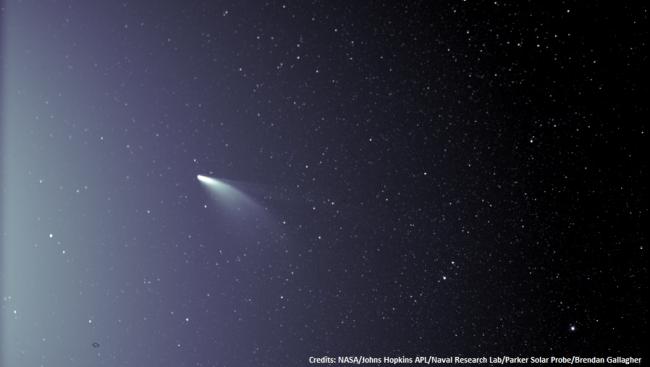
“In the year 1456...a Comet was seen passing retrograde between the Earth and the sun...
Hence I dare venture to foretell, that it will return again in the year 1758.”
- Edmond Halley
Comet Ramblings
Planetarium Newsletter - December 2021
Cosmic Curiosities
“We sometimes hear of things that can travel faster than light. Something called 'the speed of thought' is occasionally proffered. This is an exceptionally silly notion, especially since the speed of impulses through the neutrons in our brain is about the same as the speed of a donkey cart.”
- Carl Sagan
Planetarium Newsletter - March 2025
*/
/*-->*/
Cosmic Curiosities
“How
Invertebrate Zoology
The Milwaukee Public Museum had its origin in 1883 with a group of collections presented to the City of Milwaukee by the Natural History Society of Wisconsin (NHSW) that included "1,900 Marine invertebrates, dry" and “2,690 Insects.”
The collections have been managed under various departments over the years, most recently as Insect and Non-Insect Collections in the Invertebrate Zoology Department.
Clothing
Moccasins
In contrast to the stiff, rawhide sole of the Plains moccasin, the sole of the Woodland moccasin was soft, both sole and sides consisting of a single piece of deerskin with a seam up the back. Among all Woodland Indians, both sexes wore the same tribal style of moccasin, except for the Ho-Chunk, who had one type with a square front which was worn only by women.
Wild Rice
One of the food staples particularly enjoyed by the Ojibwe and Menominee was wild rice.
Wild rice is not a true rice, but rather a cereal grass -- Zizania aquatica -- which grows in shallow lakes and streams. It ripens in late summer, usually from the middle of August to early September. Native people in the Great Lakes boiled rice and ate it with corn, beans, or squash. Meat, a small amount of grease, or maple sugar was often added for seasoning. As a treat, it was occasionally parched like popcorn.