
Search
Nature & Culture Museum of Wisconsin Frequently Asked Questions
Why is MPM moving?
There are several reasons why MPM is pursuing a new facility, but the most important is that the Museum will not be able to sustain operations into the future in the current building.
The building, constructed in the early 1960s, has approximately $100 million deferred capital maintenance. Milwaukee County, despite its best efforts, simply does not have funds available to maintain the building — akin to the situation at the Domes and other county-owned facilities.
BioBlitz 2016
Grant Park
June 10-11, 2016
Property Description
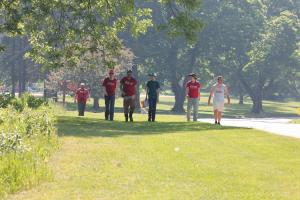 Grant Park, a unit of the Milwaukee County Park System, is a 381-acre park located at 42.918056 N 87.845982 W. It is a multi-use park with a golf course, tennis courts, soccer fields, and natural areas.
Artifacts from Lake Amatitlán
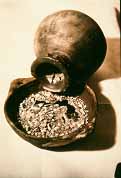
Figure 8. Face-neck jar with mercury and jade, from Lavaderos. Kitchen collection, Guatemala.
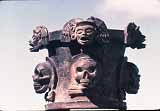
Figure 9. Censer with four skulls as decoration from Morlon. Salazar Collection, Guatemala.
News and Updates on the Nature & Culture Museum of Wisconsin
The latest: The building's 670 exterior concrete panels have been installed. Crews are now installing the glass for the windows and beginning interior work.
MPM is in the process of building a new, 200,000-sq. ft. natural history museum in downtown Milwaukee, set to open in early 2027. Learn about the latest construction milestones, visitor experience announcements, behind-the-scenes packing efforts, and more:
Architecture and Amenities
Inspired by the unique rock formations at Mill Bluff State Park in central Wisconsin as well as the confluence of Milwaukee's three rivers, the architectural design of the Future Museum will stoke curiosity and wonder and serve as a gathering place for learners of all ages and backgrounds to come together. Learn more about the inspired design and view high-resolution renderings of our new home:
LM BTN
Exhibit Galleries and Visitor Experiences
The Museum's five permanent galleries will feature several exhibits that explore the interconnectedness of nature and culture under their broader gallery theme. The exhibits will build upon and reimagine the iconic moments and visitor experiences at the current Museum, showcasing many of the 4 million priceless objects and specimens.
Click the buttons below to view design concepts of the Future Museum's exhibit galleries:
EX BTNS
Housing and Architecture
Great Lakes Indian tribes depended on the forests for raw materials for their homes and they built a variety of dwellings depending on the season.
The most common was the dome-shaped wigwam, which served from late fall through spring. With the exception of the Iroquois, all Woodland tribes from New England to the Mississippi River built this style of structure.
Potawatomi History
The Potawatomi are an Algonkian-speaking tribe which has lived in the Great Lakes region for at least four centuries.
Oral traditions of the Potawatomi, Ojibwe, and Ottawa assert that at one time all three tribes were one people who lived at the Straits of Mackinac. From there, they split off into three separate groups, and the Potawatomi were "Keepers of the Sacred Fire." As such, they were the leading tribe of the alliance the three Indian nations formed after separating from one another.
Planetarium Newsletter - October 2024
*/
/*-->*/
Cosmic Curiosities
“In awe, I watched the waxing moon ride across the zenith of the heavens like a