Planetarium Newsletter - July 2020
Cosmic Curiosities
“Thunderstorms are as much our friends as the sunshine.”
- Criss Jami, Contemporary American Author
Sensible Space Cents

“Thunderstorms are as much our friends as the sunshine.”
- Criss Jami, Contemporary American Author
UPDATED February 20, 2026
The Third Planet Gallery has reopened to the public.
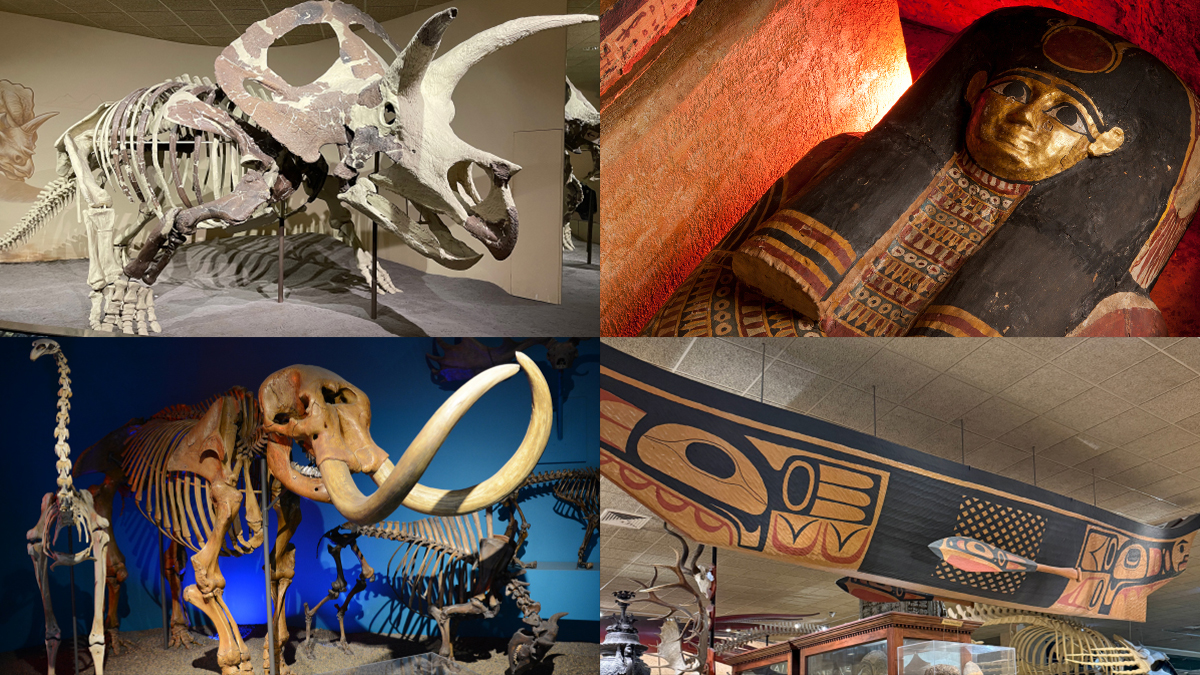
A portion of Milwaukee Public Museum’s (MPM) The Third Planet gallery on the First Floor will be temporarily closed to the public February 9-20, 2026, to deinstall the Torosaurus skeleton at the entrance of the gallery and the Ice Age bestiary fossils at the end of the gallery. These fossils, which contain real bones of dinosaurs and prehistoric mammals, need to undergo significant cleaning, potential repairs, and, in some cases, repositioning to get them ready for display in the Nature & Culture Museum of Wisconsin (NCMW).
During this period, the Haida boat replica, which hangs above the Sense of Wonder exhibit on the First Floor at the top of the Grand Staircase, will be removed. This boat will go on display in NCMW and needs to be moved into the new building before the glass for the windows is installed during the first quarter of 2026. The object is too large to fit through the doors of the new Museum and cannot be taken apart. The Haida boat will be stored at MPM in the Butterflies Alive! play area for a few weeks, until crews are ready to safely transport it to the new building. As a result, the play area will be temporarily closed beginning February 9. It is expected to reopen sometime in March.
Beginning February 17, the two Ancient Egyptian mummified individuals and their coffins will also be deinstalled from the Crossroads of Civilization exhibit on the Third Floor. The coffins require a thorough condition assessment so that they can be stabilized and cleaned before future display in NCMW. Items of this nature are intrinsically delicate and require significant time to properly conserve.
Deinstallation in this context refers to the removal of museum artifacts and specimens that are on exhibit.
The Torosaurus skeleton, Ice Age bestiary fossils (mastodon, moa, long horn bison, Smilodon, peccary, and Irish elk), Haida canoe replica, and two Ancient Egyptian mummified individuals and their coffins will be removed.
Are any objects that are being deinstalled going to be on display in the new Museum?
The Torosaurus skeleton and the Ice Age bestiary fossils (except for two Ice Age specimens that were on loan from the Smithsonian) will be going on display in the Nature & Culture Museum of Wisconsin’s Time Travel gallery.
The Haida canoe will be going on display in the Living in a Dynamic World gallery.
The two coffins will be going on display in the new museum’s Deserts Hall within the Living in a Dynamic World gallery. The mummified individuals will rest off exhibit at the new building.
Restoration Casting International (RCI), a company based out of Ontario, Canada that specializes in museum specimen restoration, casting, mounting, exhibit fabrication, and transportation, will be deinstalling the Torosaurus skeleton, Ice Age bestiary fossils, and Haida canoe.
MPM’s Collections Move team is handling the deinstallation of the mummified individuals and coffins.
RCI will disarticulate (take apart) the Torosaurus skeleton and Ice Age fossils and pack them into crates for eventual treatment back at their workshop in Canada. This treatment will entail cleaning, conservation, and in some cases, remounting. RCI will then ship the fossils to the new Museum, where they'll assist in reconstructing and installing the specimens.
MPM’s Collections Move team will carefully clean and stabilize the Ancient Egyptian coffins so that they can be put on back display in NCMW. Items of this nature are intrinsically delicate and require significant time to properly conserve.
The Pre-Columbian America Mezzanine above the Third Floor permanently closed for packing in spring of 2025. You can take a virtual tour of the space here.
More temporary exhibit closures are expected throughout 2026 as the Museum continues to pack its 4 million collections items. The temporary closures will be staggered and limited to specific areas in the Museum to reduce the impact on the public and ensure visitors still have an enjoyable Museum experience throughout our three floors of exhibits. The vast majority of object deinstallations will take place after MPM’s last day of operation on January 3, 2027.
MPM’s curatorial and collections staff are currently assessing deinstallation plans. Once we have more information, we will notify visitors and members.
MPM will alert the public to exhibit closures via our website, social media, signage in the Museum, and email communications.
It's a time to shine a spotlight on the rich histories, cultures, and contributions of people of Asian, Asian American, Native Hawaiian, and Pacific Islander descent.
Updated October 2025: The Asia Gallery has reopened to the public.
Milwaukee Public Museum’s (MPM) Third Floor Asia gallery, which explores the cultures and natural landscapes of the world’s largest continent, will be temporarily closed to the public beginning Monday, April 7, 2025, as part of the next phase of packing for our new Museum.
MPM staff are using the Asia gallery as a temporary staging area while they deinstall a small percentage of items on exhibit throughout the Museum. The artifacts and specimens that are removed will be inventoried, organized, and prepared for display in the new museum’s exhibit gallery Living in a Dynamic World—an entire floor full of immersive scenes that depict people, plants, and animals found across different landscapes.
MPM's Pre-Columbian America Mezzanine above the Third Floor, which contains pottery and metal objects from pre-colonial Central and South America and the Caribbean, will permanently close for full exhibit deinstallation while the Asia gallery is temporarily closed. Several of the objects in the Mezzanine will also be on display in Living in a Dynamic World at the new museum.
During these closures, visitors are invited to take a virtual tour of the Asia gallery and the Third Floor Mezzanine.
The other six galleries on the Third Floor (Africa, Arctic, Crossroads of Civilization, Middle and South America, Pacific Islands, and Living Oceans) remain open to the public, as well as the entire Second, First, and Ground Floors of the Museum. Visitors have through most of 2026 to enjoy the current museum before the new museum opens in early 2027.
Once we have more details about how the deinstallation process is going, we will share a more specific timeline.
Deinstallation in this context refers to the removal of museum artifacts and specimens that are on exhibit.
The Asia gallery temporary closure and Mezzanine permanent closure are the first gallery closures related to the move. Collections and curatorial staff have already packed hundreds of thousands of items that are not on public display. Those objects in storage will continue to be packed simultaneously as those on exhibit.
During this first round of object deinstallation, we will gain crucial information that will improve future processes and help us better determine timelines for other exhibit closures. This will ensure that our guests have advanced notice so they can visit other cherished exhibits in the current museum before the new museum opens in 2027.
During this closure, it’s estimated that a few hundred items will be removed. With hundreds of thousands of items still on display throughout the Museum, there will be plenty to see during the closure and after the gallery reopens.
This first round of deinstallation will have minimal impact on the visitor experience. While a few cases may be noticeably different or empty, the vast majority of exhibits will not be affected.
Entire exhibits will not be deinstalled during the Asia gallery temporary closure. Rather, individual objects or groups of objects, and in a few instances, entire case contents, will be removed from a larger exhibit. The majority of objects being deinstalled are from the Third Floor.
The Third Floor Mezzanine (Pre-Columbian America) is the only wing in the Museum that will be fully deinstalled during this closure.
The Third Floor Mezzanine (Pre-Columbian America) sees the least amount of visitor traffic among MPM’s exhibits, given where it’s located in the building. Visitors with mobility limitations are also unable to access the area because it is only accessible via stairs; the elevator for the Mezzanine cannot be repaired. For these reasons, the closure is expected to have minimal to no impact on visitors’ Museum experience.
Several of the objects from the Mezzanine (the Museum’s pre-Columbian collections) will be on display in the Living in a Dynamic World gallery in the new museum.
The other specimens and artifacts that are being deinstalled throughout the Museum during the Asia gallery temporary closure will be on display in the Living in a Dynamic World gallery in the new museum.
The Museum’s Collections Move team is handling the deinstallation.
The Collections Move team works with Museum security to access the objects, oftentimes in locked glass cases. The team then carefully removes the items one by one, starting with those that are most accessible and then working further into the case. Objects are then passed onto a cart and brought to the staging area in the Asia gallery.
Each object is photographed, inventoried, and barcoded. The items that will be going on display in the new museum are then organized, staged, cleaned, and checked for damage by conservation technicians before they will eventually be wrapped and packed.
The other six galleries on the Third Floor (Africa, Arctic, Crossroads of Civilization, Middle and South America, Pacific Islands, and Living Oceans) remain open to the public.
More temporary gallery and exhibit closures are expected throughout the next year and a half as the Museum continues to pack its 4 million collections items. The temporary closures will be staggered and limited to specific areas in the Museum to reduce the impact on the public and ensure visitors still have an enjoyable Museum experience throughout our three floors of exhibits.
MPM’s curatorial and collections staff are currently assessing deinstallation plans. Once we have more information, we will notify visitors and members.
During this first round of object deinstallation, we will gain crucial information that will improve future processes and help us better determine timelines for other exhibit closures. This will ensure that our guests have advanced notice so they can visit other cherished exhibits in the current Museum before the new museum opens in 2027.
MPM will alert the public to exhibit closures via our website, social media, local news outlets, signage in the Museum, and in email communications.
As agrarian development, mining, logging, and other social processes continue to threaten the nomadic lifestyles of herding Sami groups, increasing numbers of individuals are turning to tourism for extra income.
Originally, the Native people who made up the Brothertown Tribe and the Stockbridge-Munsee Tribe came from the greater New England area. In the 1770s, the first Brothertown settlement in western New York drew members from the Narragansett tribe in Rhode Island; the Pequot, Mohegan, and Niantic tribes in southeastern Connecticut; the Tunxis and Wangunk tribes in north-central Connecticut; and the Montauk tribe on Long Island.
There were both games of dexterity and games of chance, and betting was also customary. In addition, there were games for children. Later, modern cards and card games were adopted from Whites. Games were played by men, by women, and by the children, but only rarely did the two sexes, as adults, play together.