
Search
Wisconsin Outpost
Aztalan is characteristic of other known Middle Mississippian societies, especially Cahokia, but archaeologists don't know exactly why the Mississippians came to what is now known as Wisconsin. One hypothesis is that Aztalan served as a northern outpost in an attempt to gain political and ideological control of this region. Another hypothesis is that the Mississippians came to expand trade with local Late Woodland groups.
Habitat
 Field Notes: |
Fossil Fuel Fund
The costs associated with a field trip can add up quickly.
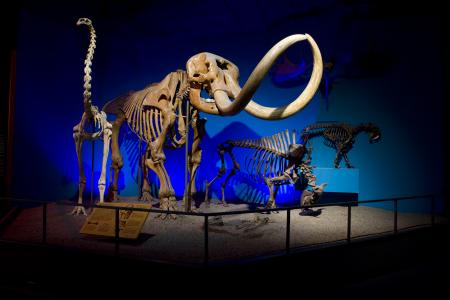 MPM's Fossil Fuel Fund may be able to help alleviate some of these costs. The process is easy: Simply book your field trip, then apply for a Fossil Fuel Fund award.
Planetarium Newsletter - March 2025
*/
/*-->*/
Cosmic Curiosities
“How
The Robenhausen Site in Switzerland
Prehistoric Pfahlbau (“pile dwellings”) settlements dotted the Swiss lakeshores between 3,000 and 6,400 years ago, during what is now known as the European Neolithic.
One of the best-known examples of a Pfahlbau settlement is Robenhausen, located just east of Zurich, Switzerland. The inhabitants were largely sedentary agriculturalists who built their wattle-and-daub homes both near and on the lake, which provided for many of the settlements’ needs.
Middle Mississippians
Mississippian Culture, Cahokia, and Its Relationship to Aztalan
Around 800 A.D. Late Woodland Indian cultures in the Midwest made a shift to more extensive maize (corn) horticulture and by 1000 A.D. had organized a complex society referred to by archaeologists as Middle Mississippian. This distinct cultural name is derived from its development in the central part of the Mississippi River valley.