
Search
Planetarium Newsletter - February 2024
*/
/*-->*/
Cosmic Curiosities
“May you build a ladder to the stars
Warfare and Defense
Warriors and Leadership
Although warfare never attained the prominence it did among the Plains tribes, it still had considerable importance in the Woodland value system. Among Indian tribes of the Great Lakes, warfare and hunting were exclusively male activities. A man's position and stature within an Indian society often rested on his abilities and accomplishments as a hunter and warrior.
Planetarium Newsletter - September 2022
Cosmic Curiosities
“Like the moon, I have learned to be beautiful in darkness.”
- Collette O'Mahony, American Author and Poet
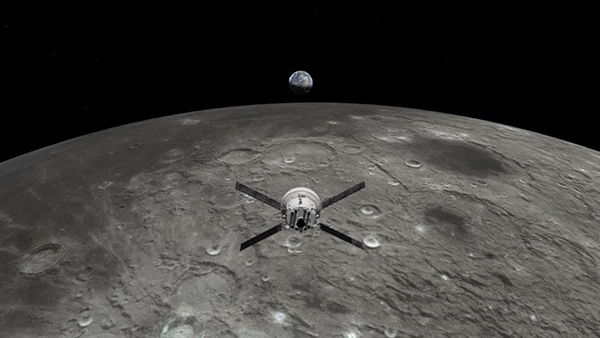
Touching the Moon
Planetarium Newsletter - March 2019
Cosmic Curiosities
“Justice is like the north star, which is fixed, and all the rest revolve about it.”
- Confucius
Stellar Speedway
Early Learning: Bugs and Butterflies
Some consider bugs yucky and gross, while others are very interested in the various critters that surround us.
 Here, we will be focusing on two types of bugs: insects and arachnids. Examples of insects include butterflies, ladybugs, bees, etc. And arachnids aren’t just spiders -- other examples include scorpions and ticks.
Current Museum Exhibit Update - April 2025
Updated October 2025: The Asia Gallery has reopened to the public.
Milwaukee Public Museum’s (MPM) Third Floor Asia gallery, which explores the cultures and natural landscapes of the world’s largest continent, will be temporarily closed to the public beginning Monday, April 7, 2025, as part of the next phase of packing for our new Museum.
MPM staff are using the Asia gallery as a temporary staging area while they deinstall a small percentage of items on exhibit throughout the Museum. The artifacts and specimens that are removed will be inventoried, organized, and prepared for display in the new museum’s exhibit gallery Living in a Dynamic World—an entire floor full of immersive scenes that depict people, plants, and animals found across different landscapes.
MPM's Pre-Columbian America Mezzanine above the Third Floor, which contains pottery and metal objects from pre-colonial Central and South America and the Caribbean, will permanently close for full exhibit deinstallation while the Asia gallery is temporarily closed. Several of the objects in the Mezzanine will also be on display in Living in a Dynamic World at the new museum.
During these closures, visitors are invited to take a virtual tour of the Asia gallery and the Third Floor Mezzanine.
The other six galleries on the Third Floor (Africa, Arctic, Crossroads of Civilization, Middle and South America, Pacific Islands, and Living Oceans) remain open to the public, as well as the entire Second, First, and Ground Floors of the Museum. Visitors have through most of 2026 to enjoy the current museum before the new museum opens in early 2027.
FAQs
When will the Asia gallery reopen?
Once we have more details about how the deinstallation process is going, we will share a more specific timeline.
What is deinstallation?
Deinstallation in this context refers to the removal of museum artifacts and specimens that are on exhibit.
Is this the first gallery/exhibit closure related to the move?
The Asia gallery temporary closure and Mezzanine permanent closure are the first gallery closures related to the move. Collections and curatorial staff have already packed hundreds of thousands of items that are not on public display. Those objects in storage will continue to be packed simultaneously as those on exhibit.
During this first round of object deinstallation, we will gain crucial information that will improve future processes and help us better determine timelines for other exhibit closures. This will ensure that our guests have advanced notice so they can visit other cherished exhibits in the current museum before the new museum opens in 2027.
How many objects will be removed during the Asia gallery closure?
During this closure, it’s estimated that a few hundred items will be removed. With hundreds of thousands of items still on display throughout the Museum, there will be plenty to see during the closure and after the gallery reopens.
Will there be empty exhibits around the Museum as a result of this deinstallation?
This first round of deinstallation will have minimal impact on the visitor experience. While a few cases may be noticeably different or empty, the vast majority of exhibits will not be affected.
Which exhibits will be removed during this closure?
Entire exhibits will not be deinstalled during the Asia gallery temporary closure. Rather, individual objects or groups of objects, and in a few instances, entire case contents, will be removed from a larger exhibit. The majority of objects being deinstalled are from the Third Floor.
The Third Floor Mezzanine (Pre-Columbian America) is the only wing in the Museum that will be fully deinstalled during this closure.
Why is the Third Floor Mezzanine permanently closing?
The Third Floor Mezzanine (Pre-Columbian America) sees the least amount of visitor traffic among MPM’s exhibits, given where it’s located in the building. Visitors with mobility limitations are also unable to access the area because it is only accessible via stairs; the elevator for the Mezzanine cannot be repaired. For these reasons, the closure is expected to have minimal to no impact on visitors’ Museum experience.
Are any objects that are being deinstalled going to be on display in the new Museum?
Several of the objects from the Mezzanine (the Museum’s pre-Columbian collections) will be on display in the Living in a Dynamic World gallery in the new museum.
The other specimens and artifacts that are being deinstalled throughout the Museum during the Asia gallery temporary closure will be on display in the Living in a Dynamic World gallery in the new museum.
Who is doing the deinstallation?
The Museum’s Collections Move team is handling the deinstallation.
What does deinstallation entail?
The Collections Move team works with Museum security to access the objects, oftentimes in locked glass cases. The team then carefully removes the items one by one, starting with those that are most accessible and then working further into the case. Objects are then passed onto a cart and brought to the staging area in the Asia gallery.
What happens to the objects after deinstallation?
Each object is photographed, inventoried, and barcoded. The items that will be going on display in the new museum are then organized, staged, cleaned, and checked for damage by conservation technicians before they will eventually be wrapped and packed.
Will the rest of the Third Floor be open?
The other six galleries on the Third Floor (Africa, Arctic, Crossroads of Civilization, Middle and South America, Pacific Islands, and Living Oceans) remain open to the public.
Will more exhibits be closed ahead of the move?
More temporary gallery and exhibit closures are expected throughout the next year and a half as the Museum continues to pack its 4 million collections items. The temporary closures will be staggered and limited to specific areas in the Museum to reduce the impact on the public and ensure visitors still have an enjoyable Museum experience throughout our three floors of exhibits.
Which exhibits will be temporarily closed next?
MPM’s curatorial and collections staff are currently assessing deinstallation plans. Once we have more information, we will notify visitors and members.
During this first round of object deinstallation, we will gain crucial information that will improve future processes and help us better determine timelines for other exhibit closures. This will ensure that our guests have advanced notice so they can visit other cherished exhibits in the current Museum before the new museum opens in 2027.
How will visitors be notified about future closures?
MPM will alert the public to exhibit closures via our website, social media, local news outlets, signage in the Museum, and in email communications.
Planetarium Newsletter - May 2023
*/
/*-->*/
Cosmic Curiosities
“At night in this waterless air, the stars come down just out of reach of your fingers.”
- John Steinbeck, American Writer
Ho-Chunk Oral Tradition
Origin Story
In the beginning, Earthmaker sat in space and there was nothing around him. He became conscious and realized there was nothing there. He wondered what he should do, and he began to cry. Tears flowed from his eyes and fell down below him. He looked down and saw something bright: it was his tears which had fallen and formed the oceans, lakes, and streams. Earthmaker thought some more. He realized that if he thought of something, it would simply appear. He thought of light and it became light.