Publications and Papers of the Milwaukee Public Museum (1910-2007)
Select publications below are available as PDF files.
Click title to download.

Click title to download.
This was not an unrealistic expectation, for when Hernando Cortes conquered the Aztec Empire in Mexico in 1518 and 1519, he found incredible quantities of precious metals, as did Francisco Pizarro when he conquered the Inca Empire in 1534. A French explorer, Jacques Cartier, explored the St.
Originally, the Native people who made up the Brothertown Tribe and the Stockbridge-Munsee Tribe came from the greater New England area. In the 1770s, the first Brothertown settlement in western New York drew members from the Narragansett tribe in Rhode Island; the Pequot, Mohegan, and Niantic tribes in southeastern Connecticut; the Tunxis and Wangunk tribes in north-central Connecticut; and the Montauk tribe on Long Island.
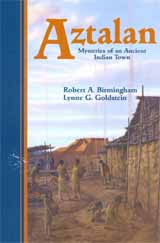
For the most complete bibliography of Aztalan and related Mississippian material please refer to Robert A. Birmingham and Lynne G. Goldstein's book Aztalan: Mysteries of an Ancient Indian Town. Wisconsin Historical Society Press. Madison Wisconsin, 2006.
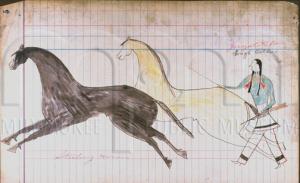
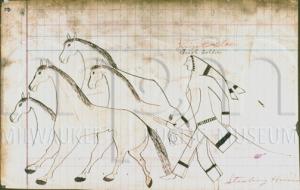
The items pictured here represent additional examples from the collection.
From the James Howard Collection:
The manidog (spirits) are said to be extremely fond of tobacco and that the only way they could get it was from the Indians, either by smoke from a pipe or by offerings of dry tobacco. According to tradition, the Indians received tobacco as a gift from Wenebojo who had taken it from a mountain giant and then given the seed to his brothers.
There once was an old woman called Nokomis (Grandmother) who had an unmarried daughter. The daughter gave birth to twin boys and during the birth, one of the boys died and so did the mother. Nokomis wrapped the surviving boy in soft grass and laid him on the ground at one side of her wigwam and placed a wooden bowl over him to protect him. She buried her daughter and the other grandchild a ways from her wigwam.