

Planetarium Newsletter - April 2026
Cosmic Curiosities
“I was interested in truth from the point of view of salvation just as much as in truth from the point of view of scientific certainty. It appeared to me that there were two paths to truth, and I decided to follow both of them.”
- Georges Lemaître, 20th-Century Priest and Physicist
The Biggest Mystery
Credit: NASA Scientific Visualization Studio
How did our universe begin? This is perhaps our most perplexing mystery. But who was the first person to propose this theory? What was the critical evidence that led to the universe ferociously springing into existence 13.7 billion years ago? It is a curious story. It starts more than 100 years ago with a Belgian priest and physicist named Georges Lemaître and his connection to probably the most famous scientist of all time, Albert Einstein.

Credit: Limin Sciences
WHO WAS GEORGES LEMAÎTRE?
Georges Lemaître was born on July 17, 1894, in Charleroi, Belgium. He looked at life and the universe from the eyes of both science and religion. He was a Catholic priest but also a brilliant physicist. Lemaître believed that scientific inquiry and faith addressed different kinds of questions and did not have to conflict.
His religious side grew from his upbringing in a devoutly Catholic family. He mentioned he felt a personal vocation since age nine. His interest in physics and science was driven by an early aptitude for mathematics. He was also exposed to new industrial technologies in Belgium. Despite his early calling for priesthood, his academic journey grew through his engineering training in school and wartime service.
THE EINSTEIN CONNECTION
Credit: Wikimedia Commons
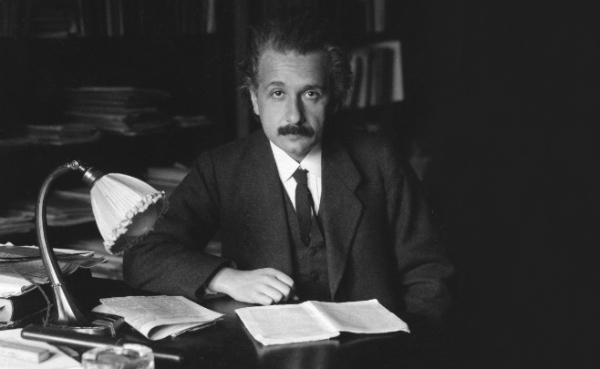
Albert Einstein was not religious, although he did speak of having a “religious feeling.” This came from his awe and appreciation of the beauty and structure of the universe. He did not believe in a personal deity who was concerned with human fates. His beliefs aligned more with Baruch Spinoza, a 17th-century philosopher who wrote of a pantheistic deity synonymous with nature.
In late 1915, Einstein published his General Theory of Relativity. This momentous discovery revealed the secrets of gravity's invisible attraction. He showed how gravity is not a force, but a curvature of spacetime caused by mass and energy. Very massive objects—like the sun—warp spacetime, and planets follow the curvature. We call this movement around the sun an orbit.
WHAT IS THE “PRIMEVAL ATOM”?
Georges Lemaître's became quite interested in Einstein's new findings. Lemaître realized that Einstein's equations might describe a universe that changes over time. This is how his expansion idea first came to fruition.
Later, he also became curious about astronomer Edwin Hubble's discovery that distant galaxies—in every direction—were moving away from the Earth. Also, the further the galaxy was, the faster it was moving. This later suggested the universe is expanding.
These findings led Lemaître to propose the universe began from an extremely dense, hot state that he called the “primeval atom.” This idea, as you might guess, turned into the Big Bang. Instead of an eternal, unchanging universe, Lemaître imagined that everything—space, time, matter, and energy, all we know—once existed in a single, compact beginning that rapidly expanded. Through long periods of time, this spreading out of space produced galaxies, stars, and planets. Georges Lemaître first published his idea of an expanding universe in 1927. At the time, many scientists were skeptical of this new idea, especially Albert Einstein.
LEMAÎTRE AND EINSTEIN MEET
Credit: Wikimedia Commons
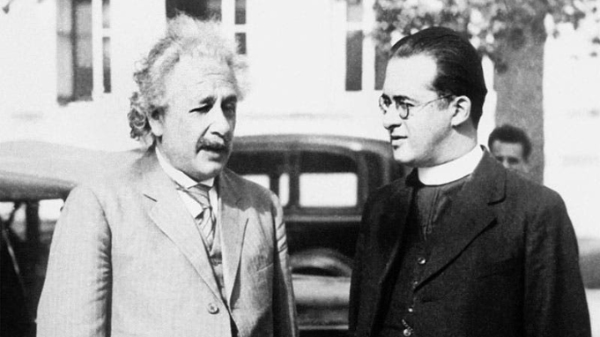
Lemaître and Einstein first met in 1927 at the Fifth Solvay Congress of Physics in Brussels. The young priest and physicist wanted to discuss his primeval atom with Einstein, who was already the world's most famous physicist.
At this time, Einstein believed in a static universe. His equations for his general theory of relativity alluded to an expanding universe, but he ignored it. Instead, Einstein inserted “fudge factor” that kept gravity from letting the universe expand. He told Lemaître, "Your calculations are correct, but your physics is abominable". Einstein's rejected the idea of the universe having a "beginning," because it seems like a theological idea of creation.
However, after Edwin Hubble's 1929 observations confirmed that galaxies were indeed moving apart—exactly as Lemaître had mathematically predicted—Einstein's skepticism turned to admiration. This time Einstein said it is "the most beautiful and satisfactory explanation of creation to which I have ever listened."
EINSTEIN'S BLUNDER
Einstein later referred that his insistence on a static universe—which led him to reject Lemaître initially—as "the biggest blunder of my life." Despite their dramatic scientific disagreements, Einstein and Lemaître maintained mutual respect. Lemaître and Einstein met in 1933 at Mount Wilson Observatory and Caltech (California Institute of Technology) in California. During a seminar where Lemaître detailed his "primeval atom" (Big Bang) theory, Einstein reportedly stood up and cheered.
WHY “THE BIG BANG"?
Credit: PBS
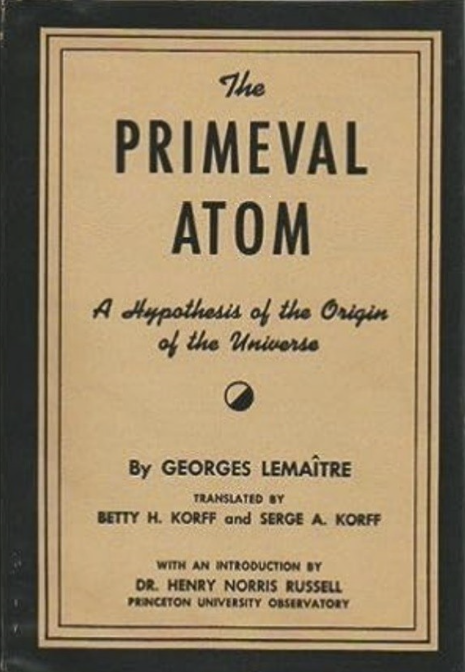
Georges Lemaître never called his origin universe theory “the Big Bang.” He stuck with his primeval atom description and even published a book about it in 1946. The term "Big Bang" was coined by British astronomer Fred Hoyle during a 1949 BBC radio broadcast. Hoyle still believed in the Steady-State model of the universe. Hoyle's wording was done in sarcasm. He was making fun of Lemaître's theory, but his Big Bang derision stuck. It was vivid and memorable.
As time went on, evidence for a hot and dense beginning of the universe grew. The culminating factor was the discovery of the leftover heat of the universe's beginning. It is known as the Cosmic Microwave Background. This leftover radiation from the Big Bang was first discovered in 1964.
You might say it's both ironic and humorous that Georges Lemaître is now called the "Father of the Big Bang" because he was a Roman Catholic priest, and that the Big Bang name was coined by a skeptic trying to ridicule his scienctific capabilities.
Cataloguing the Cosmos Creatively
A galaxy by any other name would still be a gigantic accumulation of stars!
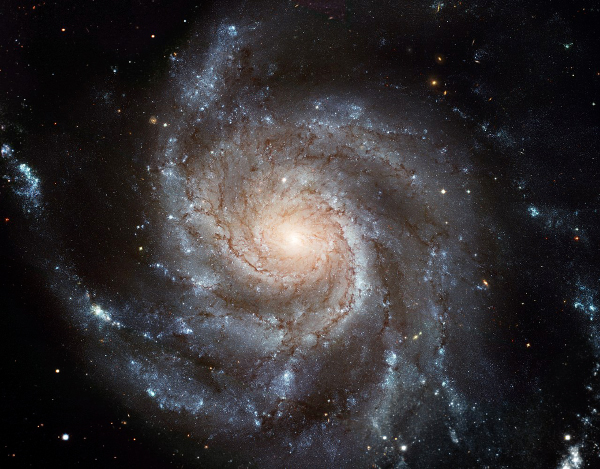
Pinwheel Galaxy or M101; credit: NASA Hubble Space Telescope
Yet, when a picture of a galaxy catches our eyes, we give them wonderful, fanciful names: Whirlpool, Sombrero, Sunflower, Antennae, Pinwheel, and Pancake are a few imaginative examples. These are all galaxies millions of light years from our planet Earth. We live in the Milky Way, named for its faint white glow arching across the night sky.
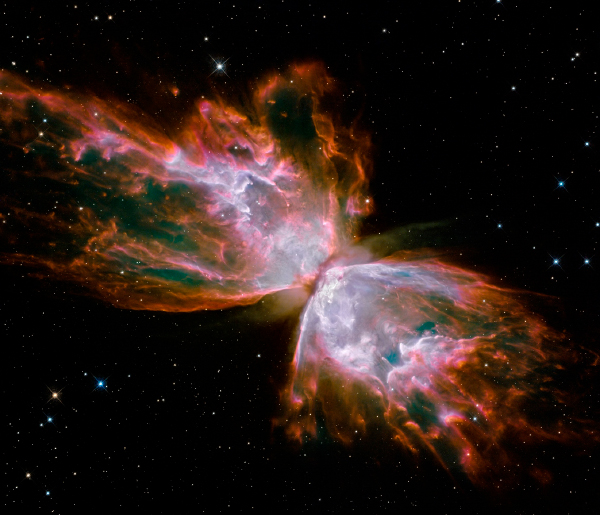
Butterfly Nebula or NGC 6302; credit: NASA Hubble Space Telescope
We name nebulae with an artistic touch, too: Butterfly, Cat's Eye, Crab, Dumbbell, Hourglass, Eagle, North American, and Witch are just a few. Nebulae are gigantic clouds of gas and dust. They originate from the death of stars and slowly remix to help form new stars!
Of course, our creativity extends all over the cosmos. Juliet, Ariel, Rosalind, Miranda, and Puck—these are some of the moons that orbit the planet Uranus. You may recognize them from characters in plays written by William Shakespeare.
Rocks on Mars have names, too. Yogi, Couch, Spud, Poohbear, and Potato received their names because excited scientists said that is what they look like.
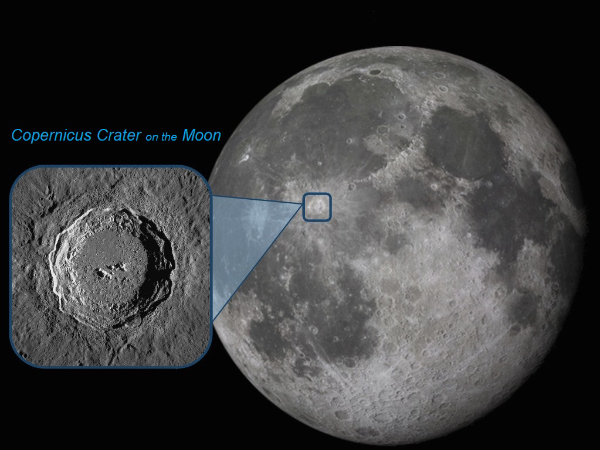
Credit: NASA
Some of the world's great thinkers and scientists are Copernicus, Tycho, Galileo, Newton, Aristotle, and Plato. Did you know they are also craters on the Moon?
After capturing this photo of the aurora a couple of years ago, I was told it looks like an orchid.
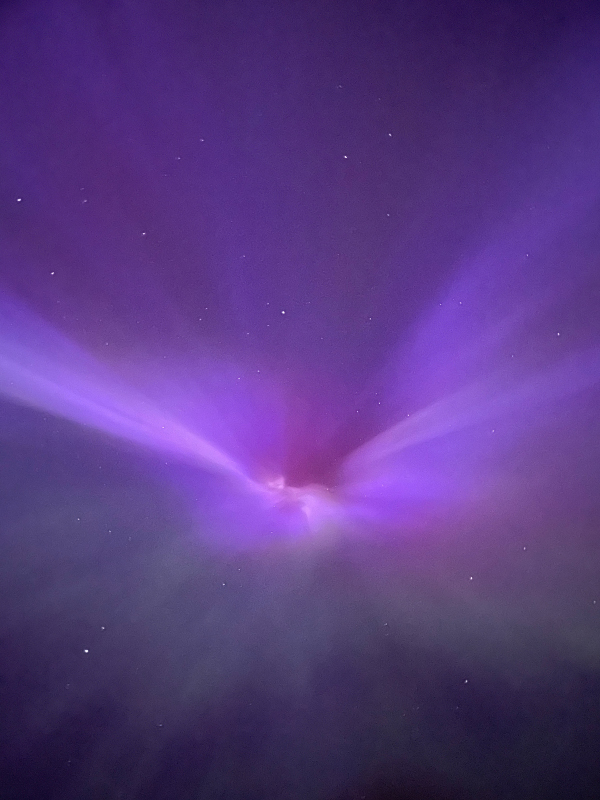
Our universe is full of colorful, evocative names. They come from us. We see ourselves and what is important to us when we gaze into the cosmos.
Another Mystery
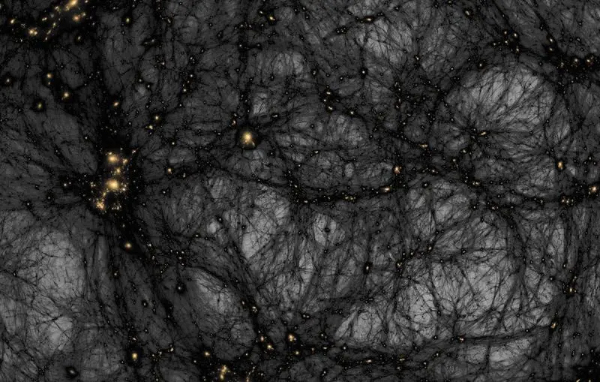
A simulation of the formation of dark matter structures from the early universe until today. Credit: Ralf Kaehler/SLAC National Accelerator Laboratory, American Museum of Natural History
Another evocative mystery is Dark Matter. It makes up approximately 27% of the total mass-energy content of the universe. We know this because of its gravitational effects on galaxies and the universe itself. However, its composition remains a riddle.
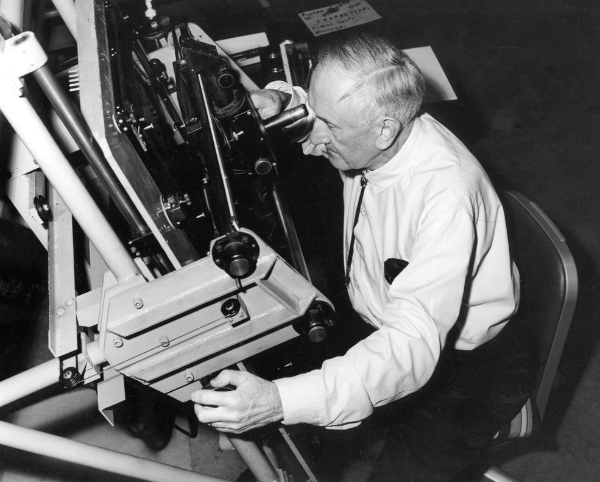
Frank Zwicky at Telescope; credit: CalTech
Swiss-American astronomer Fritz Zwicky first coined the term Dark Matter in 1933, but this discovery was not big news. While Zwicky was measuring the speeds of galaxies in the Coma Cluster, his results suggested the galaxies should be flying apart from each other, yet something was holding them together. There was an unseen mass exerting a gravitational force.
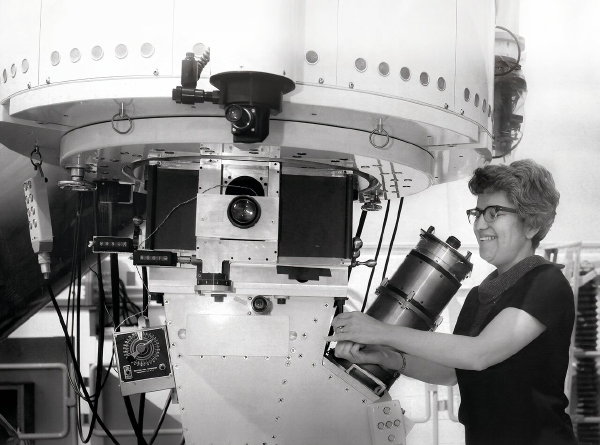
Credit: Carnegie Institution for Science
About 40 years later, astronomer Vera Rubin measured the rotation speeds of stars in distant galaxies. Like Zwicky, her findings were perplexing. Her findings indicated that stars at the outer edges of the galaxies were moving faster than they should. Her findings once again revealed an imperceptible mass was out there—somewhere.
Dark Matter gained mainstream scientific popularity shortly after Rubin's discovery. It is now a cornerstone of modern cosmology. It affects the universe on scales far larger and smaller than individual galaxies. It acts as the gravitational "scaffolding" for the entire cosmos. It ends light from distant objects, influences the evolution of the universe, and impacts large-scale structure formation.
Dark Matter remains a mystery because it is so elusive. It does not interact with light or other observational mass. Before the discovery of Dark Energy—another huge mystery—it made up about 80% of the mass in the universe!
THEORIES ON TRUE NATURE
The first and most dramatic theory is that Dark Matter is made up of primordial black holes. The intense and microscopic gravity wells formed moments after the Big Bang. The collapse of the tiny black holes was so dense, they became the invisible Dark Matter we detect today.
The second kind of theory says subatomic particles make up Dark Matter. The reasoning goes that we simply have not been able to detect them with today's technology. The Axion Theory says it is because the particle is incredibly small. They have extremely low weight and energy. The WIMPs (Weakly Interacting Massive Particles) Theory says these particles are larger but slow and unreactive.
The last explanation for Dark Matter are the MOND (Modified Newtonian Dynamics) theories. These are controversial, with some considering them even pseudoscientific and unprovable by experiments. Their basic reasoning proposes that there is no such thing as Dark Matter and that modifications to the standard model of physics could be made to account for Dark Matter. This might mean rejecting relativity, quantum mechanics, and other fundamental principles of physics.
Someday maybe, we will unlock the mystery of Dark Matter!
Space in Sixty Seconds
Watch a planetary homerun to celebrate the start of baseball!
Sky Sights
On April 1, watch the bright star Betelgeuse in Orion the Hunter go supernova. (Just kidding; happy April Fool's Day!)
Seriously, this mammoth red giant star is running out of fuel and could collapse soon. Pretty sure it will not be on April 1, but astronomers estimate this cosmic blast could occur anytime between 200 and 100,000 years from now. Astronomically, that is a very short time frame.
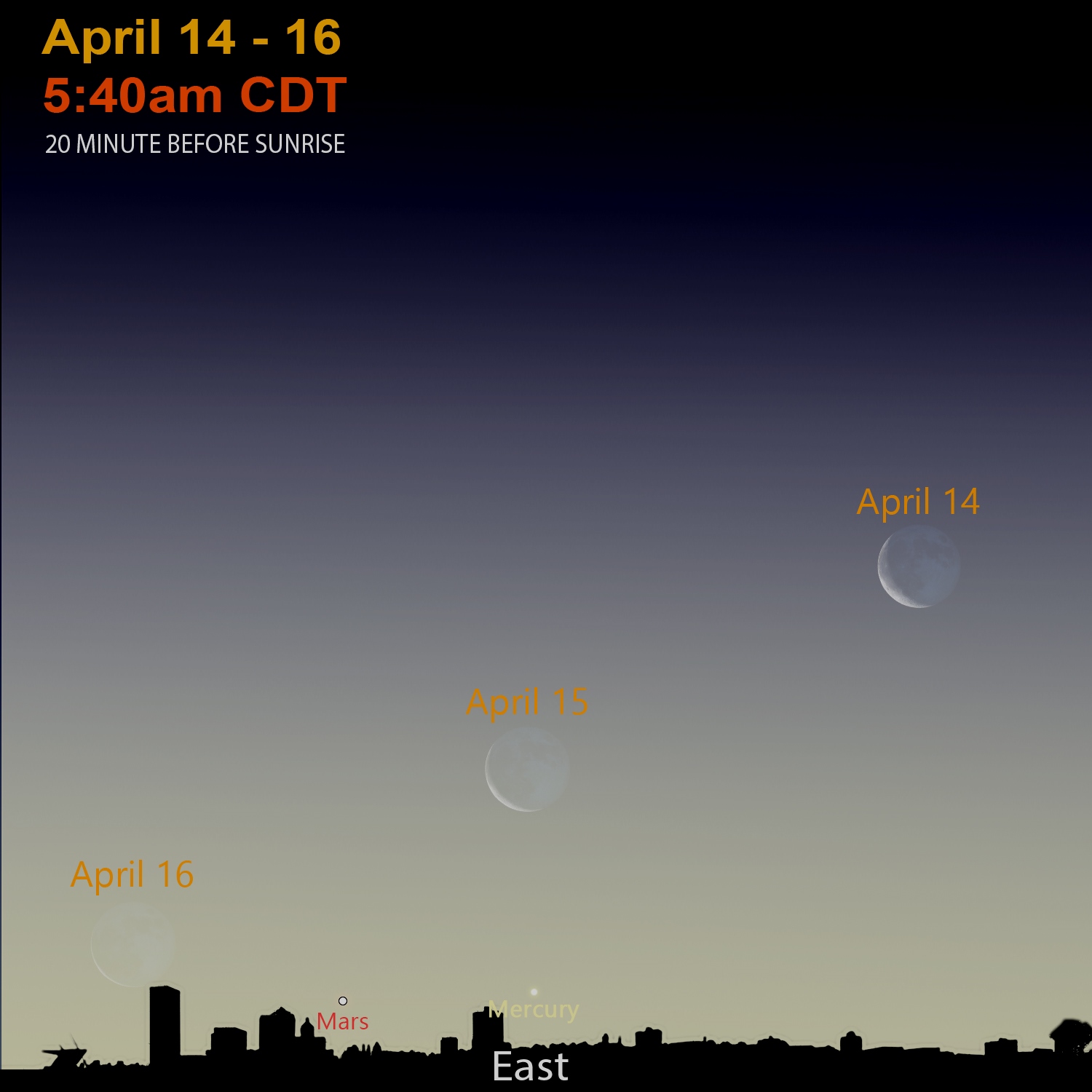
We show Mars and Mercury with the Moon from April 14 to 16. However, the sun will be so bright that you will need binoculars or a small telescope to spot them. The red planet will be easier to spot in late May with the naked eye.
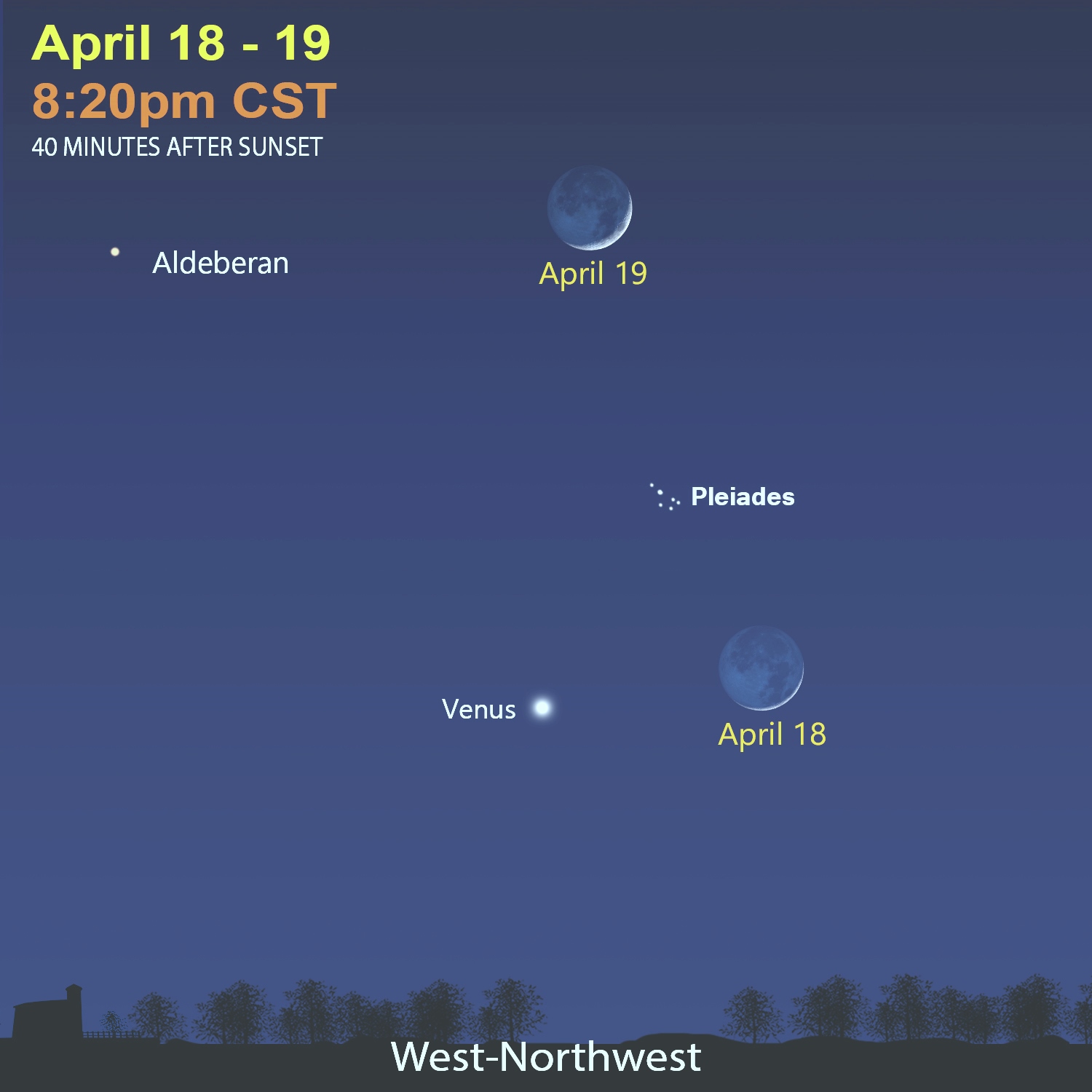
Venus and the Moon pair up on April 18 and 19. Try and catch the Pleaides, a beautiful little cluster close by. Also, look for the bright star Aldebaran, the red eye of Taurus the Bull.
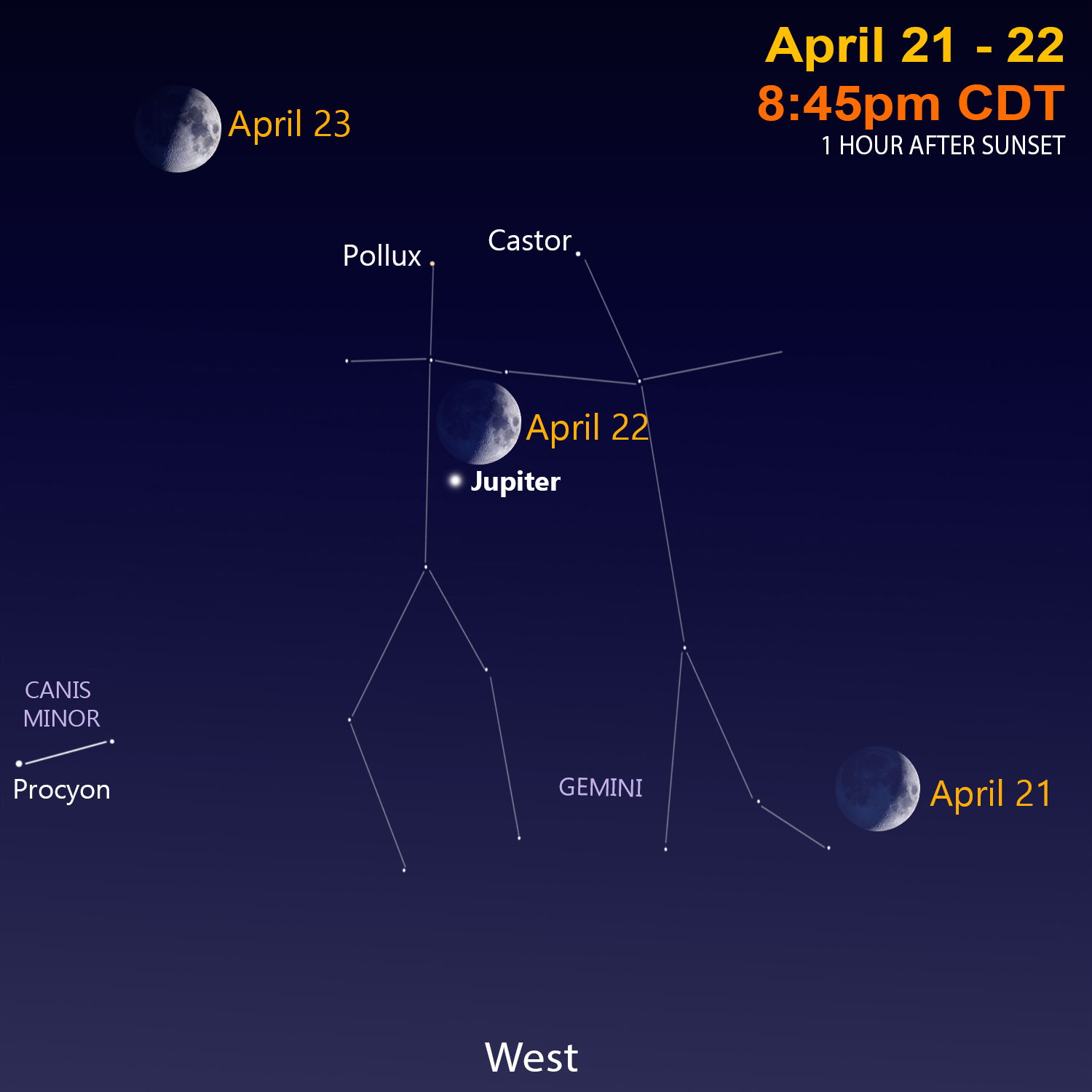
The Moon can be observed with brilliant Jupiter on April 21 and 22. Look for the twin stars Castor and Pollux in Gemini nearby.
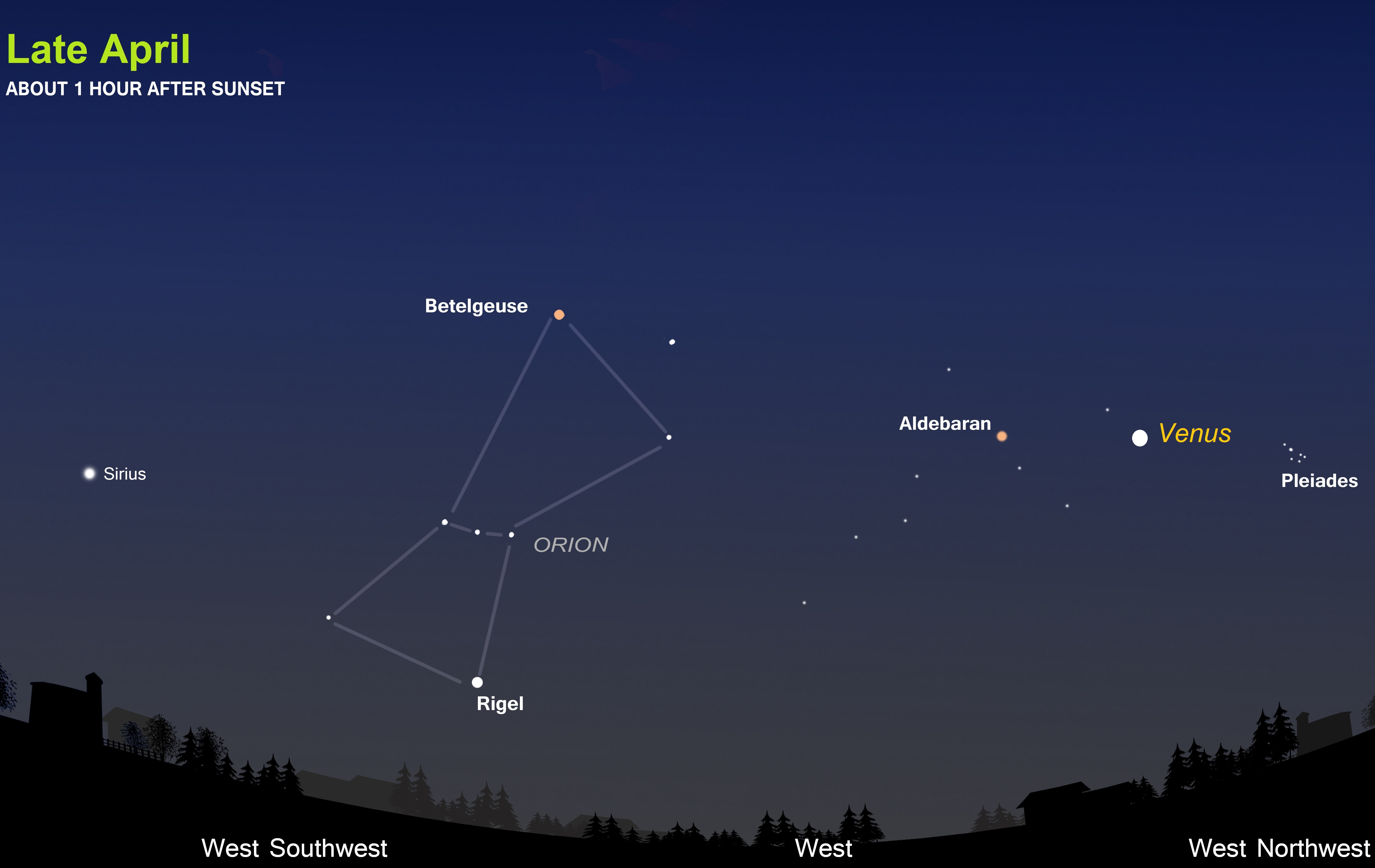
Say goodbye to our winter friend Orion the Hunter in late April. The bright stars of Orion and Taurus start to disappear slowly each night as the sun “seems” to move in front of them. The sun's motion is apparent. It is really all of us moving on a smooth ride with planet Earth around the sun.
April Star Map
Sign Up
Receive this newsletter via email!
Subscribe
See the Universe through a telescope
Join one of the Milwaukee-area astronomy clubs and spot craters on the Moon, the rings of Saturn, the moons of Jupiter, and much more.
Follow Bob on social media
Twitter: @MPMPlanetarium
Facebook: Daniel M. Soref Planetarium