Ask a Curator Day 2018
Thank you submitting your questions to our 2018 Ask a Curator Day on Wednesday, September 12!
Below, we have all your questions and answers compiled for your reference at any time.

Below, we have all your questions and answers compiled for your reference at any time.
"How can I hope to be friends
with the hard, white stars
whose flaring and hissing are not speech
but a pure radiance?”
- Mary Oliver, American Poet
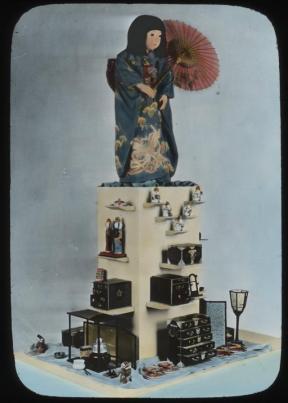
In 1926, Dr. Sidney Gullick, a missionary and educator who had lived and worked in Japan since the 1890s, created an exchange program between the United States and Japan to promote peace, friendship, and understanding. Children in almost every state raised money to send American dolls to many schools in Japan. Once the Japanese children received the dolls, they in turn raised money and sent dolls back to the United States. Kasumi Tsukuba, or Miss Ibaraki (the prefecture where she is from), was the doll sent to Wisconsin in 1927 and is now a part of Milwaukee Public Museum's permanent history collection. She arrived in the state with a chest of clothes and a parasol, along with roughly 50 other accessories. In 2006, Miss Ibaraki was flown back to Japan and returned to the company that made her in 1927, the Yoshitoku Company, where she underwent restoration.
“Like the moon, I have learned to be beautiful in darkness.”
- Collette O'Mahony, American Author and Poet
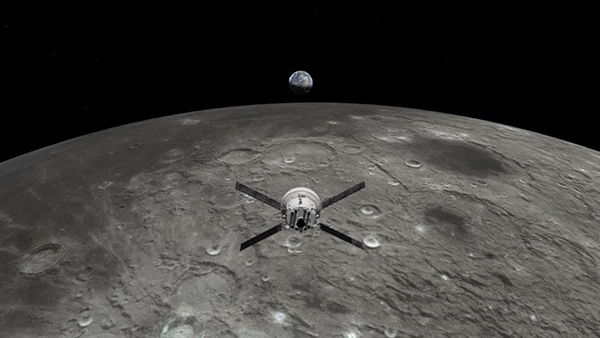
“If people sat outside and looked at the stars each night, I’ll bet they’d live a lot differently."
~ Bill Watterson, Comics Writer -- Calvin and Hobbes
 Last year, for the first time ever, gravitational waves were discovered.
This huge geographical area is the largest of the eight culture areas into which the Indians of North America have been grouped. Although the region can be characterized by its forests, significant environmental variation also exists.
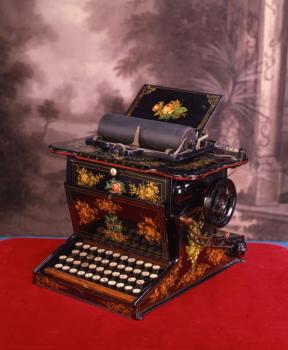
The Carl P. Dietz Collection of business machines currently numbers approximately 1,200 machines of which 900 are typewriters. The collection reflects the diversity of typewriter manufacturers and the development of machines from the 1870s to the late 1980s. The Dietz Collection holds Museum-made models of the earliest typewriters designed by Christopher Latham Sholes, post-1873 Remington production models, and many seminal typewriters of the late 19th and early 20th centuries. The business machine collection is supplemented with a collection of typewriter trade literature (manuals & advertisements) and the James Densmore Papers related to the refinement of the Sholes typewriter.
Carl Praetorius Dietz (1875-1957) came to Milwaukee with his German immigrant parents in 1881. Dietz worked in various business endeavors before his election as justice of the peace in 1902. A well known socialist party member, he later served as an acting judge and City comptroller. He left office in 1912 to develop an insurance agency and was again elected to public office (10th Ward Alderman) in 1918. Dietz served on the board of the Milwaukee Public Library, was a Mason, a Knight of Pythias, and a member of the Old Setter's Club of Milwaukee. Carl P. Dietz worked with the Milwaukee Public Museum from the 1920s until his death to build a collection of typewriters memorializing the work of Sholes and to place the typewriter squarely in Milwaukee and American history.
Loans are not made to private individuals. Please notify the Registrar of the interest to borrow material.