The Power of Poison - Media Images
The Power of Poison is organized by the American Museum of Natural History, New York.
On exhibit at the Milwaukee Public Museum March 2 – July 7, 2019.

On exhibit at the Milwaukee Public Museum March 2 – July 7, 2019.
The beings that make up Kwakiutl mythology are remarkably diverse. Accounts of their interactions with humans and each other are passed along through stories that not only form the basis of traditional Kwakiutl spiritual and ceremonial life and lore, but also connect Kwakiutl families to their ancestral pasts. Many contemporary Kwakiutl identify themselves as Christians but incorporate traditional mythology into their faith, freely blending elements of Christian and indigenous religion.
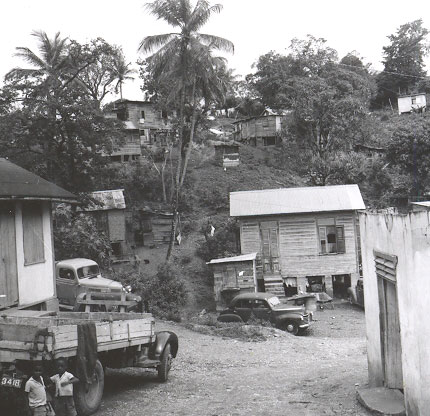
A hillside village. (MPM Neg. #: 80088B)
To date, 13 underwater archaeological sites have been found and all but one are in the northern half of the lake. Evidence of ancient agricultural terraces is evident on the hills of the northern and southern shores of Lake Amatitlán, and several Maya archaeological sites have been identified on the shores as well. The order and type of ceramic styles found at a site can provide clues to its age.
John Baptiste DuBay is believed to have been born July 10, 1810 in Green Bay, Wisconsin. His father was John Louis DuBay, a French-Canadian fur trader from Montreal, rumored to be the first European in Portage County. His mother is thought to be a Menominee woman, possibly the daughter of Chief Pewatenot (Menominee). Little else is known about DuBay until his involvement in the fur trade in his early teens.
The Old Copper Complex, also known as the Old Copper Culture, refers to the items made by early inhabitants of the Great Lakes region during a period that spans several thousand years and covers several thousand square miles. The most conclusive evidence suggests that native copper was utilized to produce a wide variety of tools beginning in the Middle Archaic period circa 4,000 BC. The vast majority of this evidence comes from dense concentrations of Old Copper finds in eastern Wisconsin.
The Oneida Tribe are members of the League of the Iroquois, a confederacy of the Seneca, Cayuga, Onondaga, Oneida, and Mohawk based on mutual non-aggression. At a later date, the Tuscarora joined the Confederacy.