

Planetarium Newsletter - August 2026
Cosmic Curiosities
Seeing a partial eclipse bears the same relation to seeing a total eclipse as kissing a man does to marrying him, or as flying in an airplane does to falling out of an airplane.
- Annie Dillard, American Writer
Eclipse Doubleheader
We have both a solar and lunar eclipse in August 2026. The last time Wisconsin had two eclipses in the same calendar month was May 1994! It’s an eclipse doubleheader.
If weather permits, the Planetarium will have a telescope out by the green clock on Wells Street for viewing the eclipse.
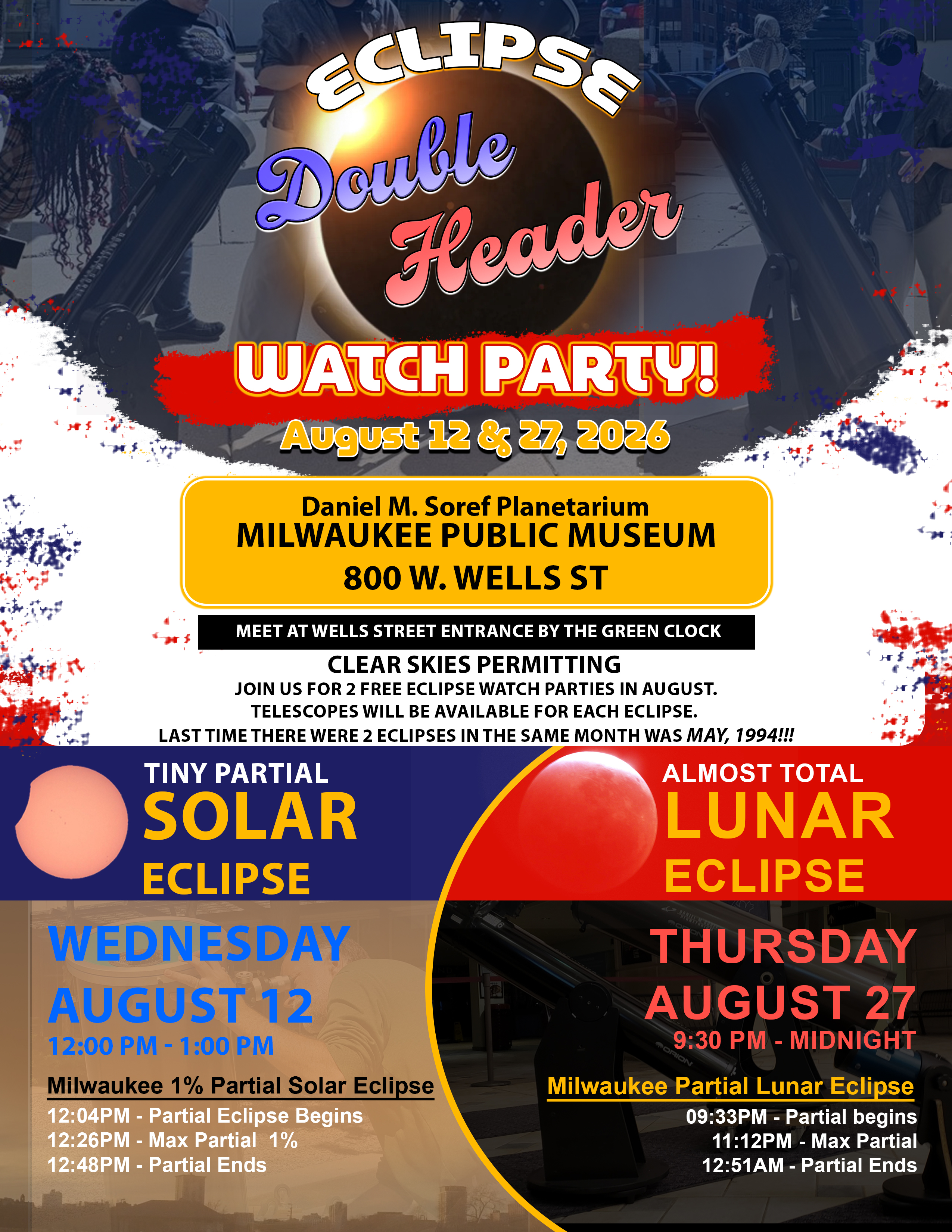
TINY PARTIAL SOLAR ECLIPSE—WEDNESDAY AUGUST 12
This is an itsy-bitsy solar eclipse. The moon will obscure only 1% of the sun’s surface. There will be no darkening. With protective eclipse glasses, you will not notice the tiny part of the eclipsed sun. With special filters, we can see the micro-eclipse with our telescope.
Wisconsin represents the absolute outer limit of this eclipse. The path of totality—where the moon block 100% of the sun—is far away, from Iceland to northern Spain.
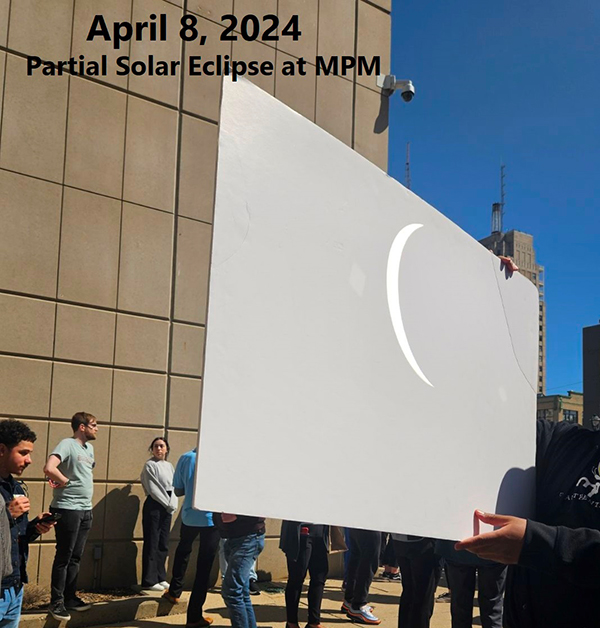
If you recall, on April 8, 2024, 83% of the sun disappeared. There was only a very slight darkening back then. That was a big event. We had a great crowd here at the Planetarium!
So, why bother with a 1% eclipse? Here are three quick reasons:
- Seeing any eclipse is a connection to our two brightest lights—the sun and moon.
- Eclipses unite us in a shared joy of the splendors of the sky—the harmony of the heavens.
- They spark wonder, curiosity, and questions! How did we learn to predict eclipses? Why don’t eclipses happen every month? How did eclipses affect humans through history? Did a total solar eclipse really stop a war more than 2,000 years ago? And there are so many more questions from so many of us.
NEAR TOTAL LUNAR ECLIPSE—THURSDAY, AUGUST 27
The second eclipse arrives on the evening of August 27, continuing into the early hours of August 28, when 93% of the lunar disk disappears into the Earth’s shadow.
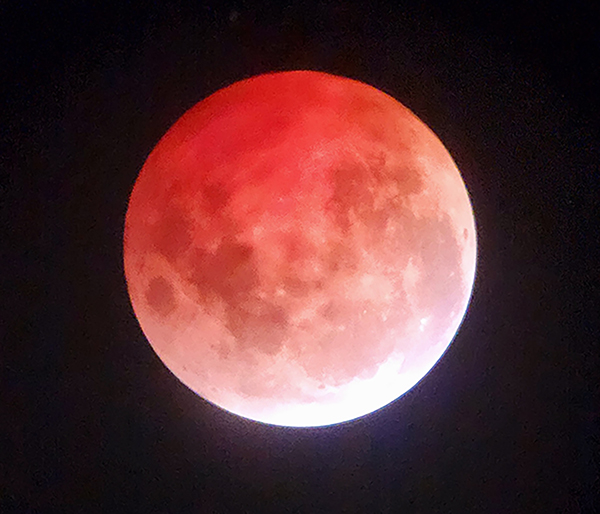
Due to the refraction of sunlight by the Earth’s atmosphere, the moon will take on an orange-red glow. No special equipment is needed to watch—just clear skies. Again, the Planetarium will have a telescope for a close-up view from 9:30 p.m. to midnight.
Research into Milwaukee's eclipse history indicates this is indeed the first time since May 1994 that the city has experienced two visible eclipses during the same calendar month. In May 1994, Milwaukee saw a spectacular 85% partial solar eclipse on May 10 followed by a partial lunar eclipse May 24–25.
A New Space Telescope
Credit: NASA
Get set for another telescope milestone!
On August 30, 2026, NASA’s Nancy Grace Roman Space Telescope is scheduled to launch. The $4.3B observatory will lift off aboard a SpaceX Falcon Heavy rocket from Kennedy Space Center in Florida. It will travel a million miles to the Sun-Earth Lagrange Point, called L2 - the same place the James Webb Space Telescope (JWST) is located. It will take 90 days to get there as scientists and engineers check all the telescope’s parts and systems. The first pictures and scientific operations will start near the beginning of 2027.
Credit: NASA
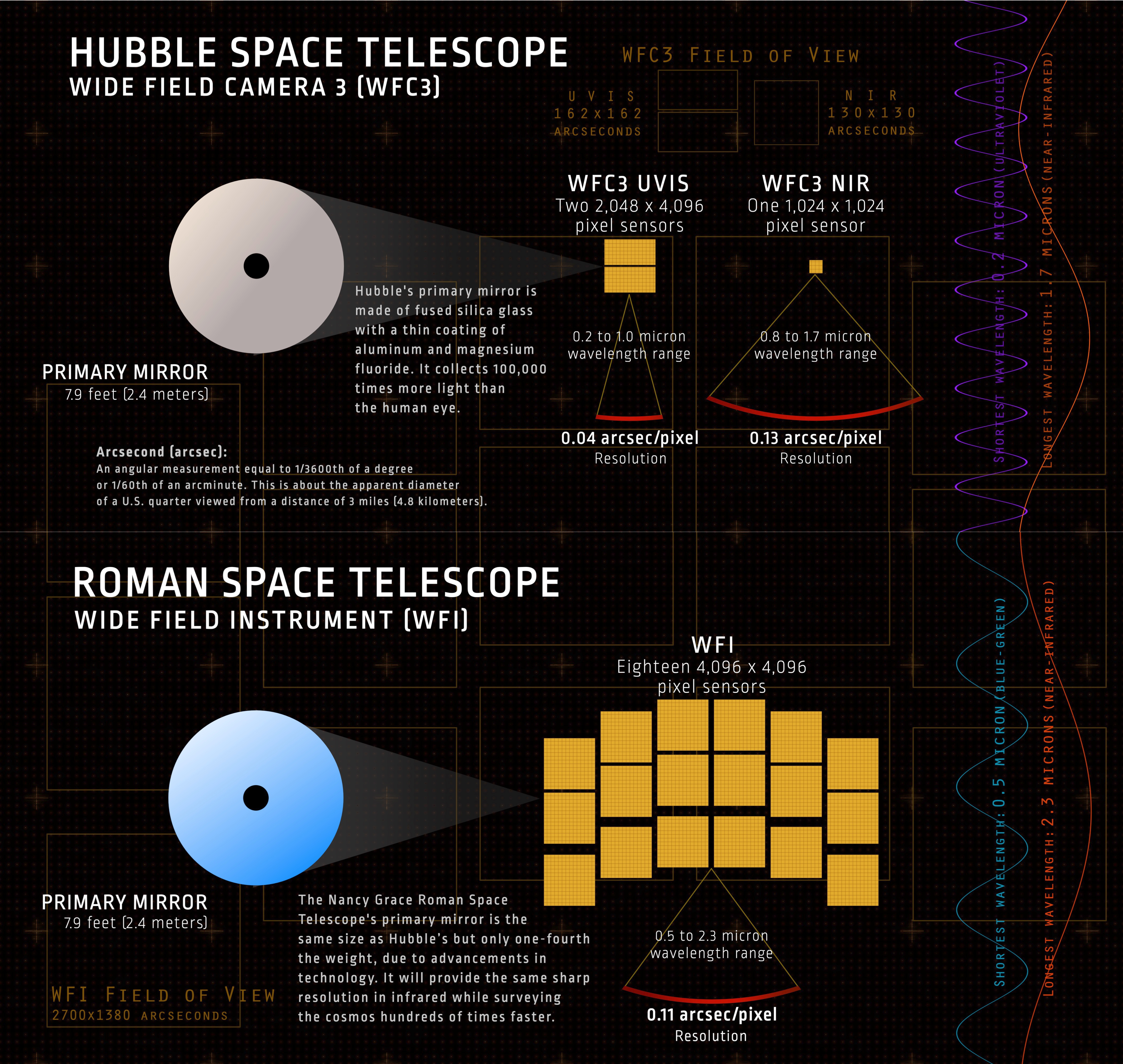
The telescope will function as a flagship astrophysics observatory designed to scan wide swaths of the cosmos, with a panoramic field of view at least 100 times larger than the Hubble Space Telescope. Its primary mission is to try and answer the biggest mysteries out there. It will look for clues to what constitutes dark energy and dark matter. It will search for exoplanets. And lastly, it will observe distant galaxies to understand the evolution of the universe.
The new views, like its predecessors Hubble and JWST, will be breathtaking. Roman combines extraordinary sensitivity with an incredibly wide field of view, allowing astronomers to study vast regions of the cosmos with unprecedented speed and precision.
The telescope's discoveries could fundamentally reshape our understanding of the universe. Like every revolutionary observatory before it, its greatest discoveries may be the ones scientists have not yet imagined.

Credit: NASA
WHO WAS NANCY GRACE ROMAN?
The telescope honors Dr. Nancy Grace Roman (1925–2018), often called the "Mother of Hubble." As NASA's first Chief of Astronomy, she played a pivotal role in planning the Hubble Space Telescope at a time when few women held leadership positions in science. Despite facing discrimination early in her career, Roman remained determined to pursue astronomy, becoming one of the most influential figures in the history of space exploration.
Nancy Grace Roman's legacy extends far beyond her scientific achievements. She demonstrated that curiosity, perseverance, and determination can overcome barriers, inspiring generations of young women to pursue careers in science, technology, engineering, and mathematics (STEM). The telescope bearing her name stands not only as a powerful scientific instrument but also as a lasting tribute to her vision, leadership, and belief that the exploration of the universe should be open to everyone.
Perseid Power
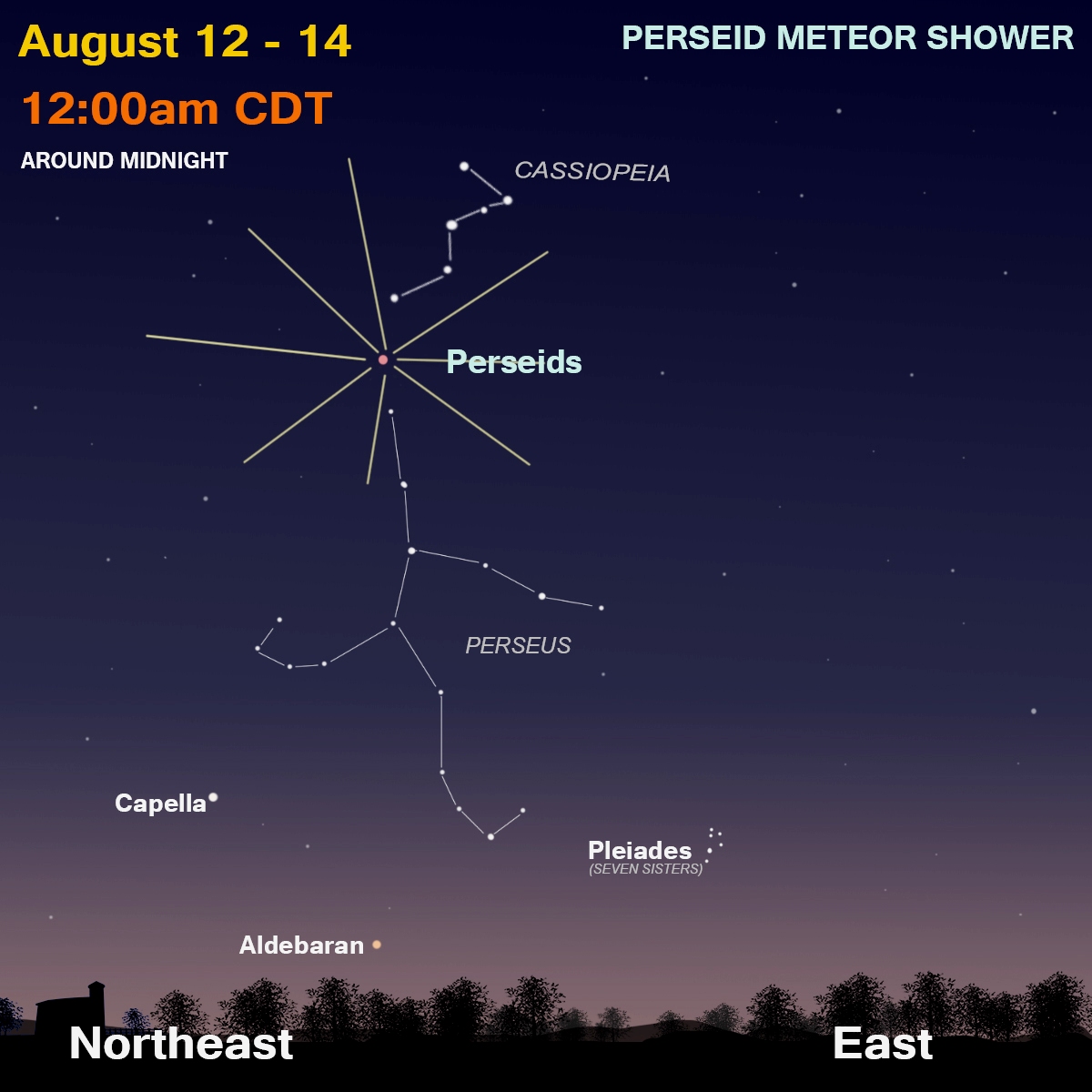
Since the bright moon is busy with the eclipse during the peak of the Perseids, we should have a better display of the annual “falling stars.”
Remember to get away from the city lights if possible. The best time to watch the meteors is from midnight until dawn. The “shooting stars” come from the constellation Perseus, which does not clear the horizon until after midnight. By 5 a.m. CDT, Perseus is high in the sky.
The best morning will be Thursday, August 13, when the Perseids peak. Still, a morning or two before and after the peak might still produce a good sky show. Sunrise is just before 6 a.m. on August 12 through 14. Enjoy!
Space in 60 Seconds
Keep up with the solar and lunar eclipses, the Perseid meteors, and the launch of a new space telescope!
Sky Sights
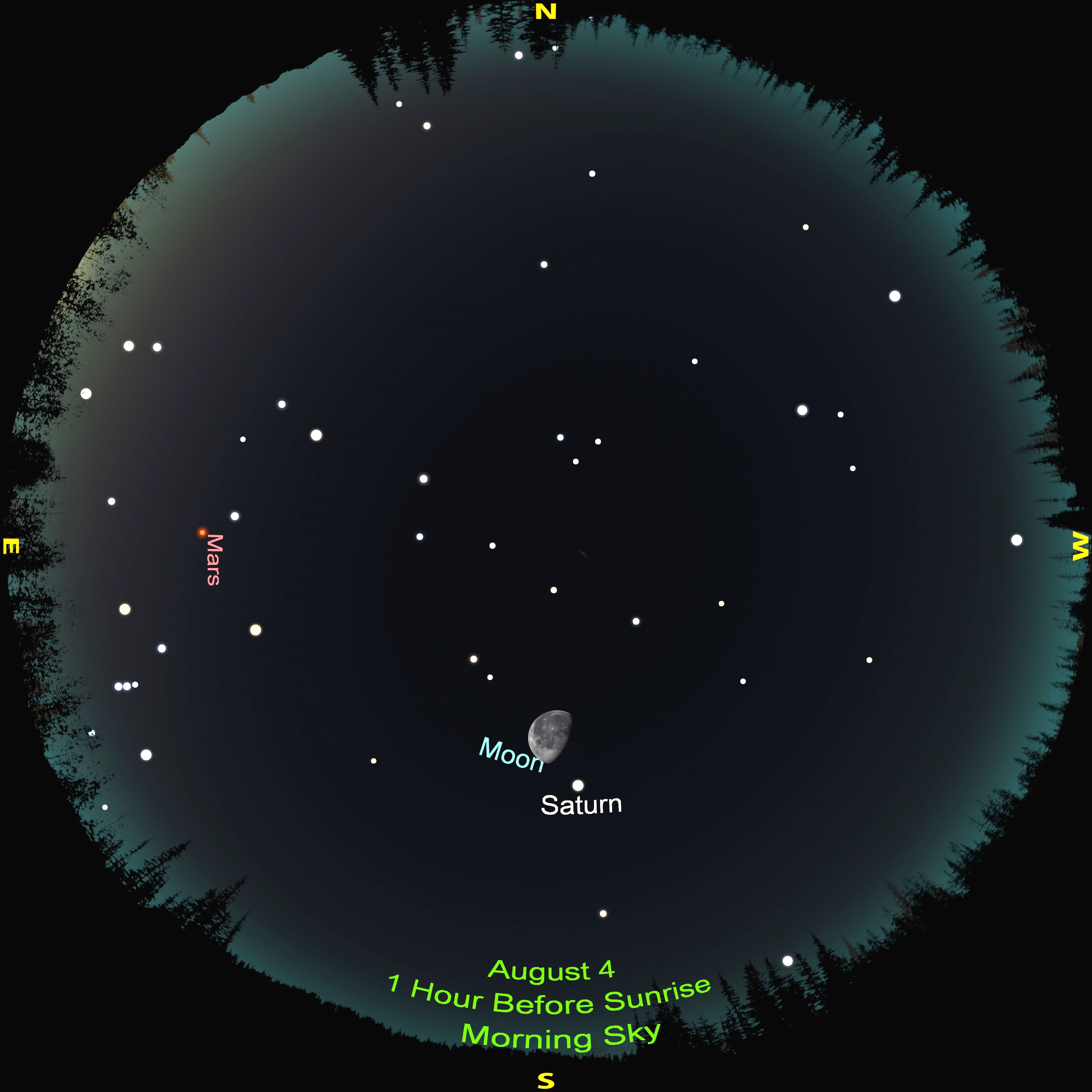
For early risers, catch the Moon and Saturn on the morning of August 4. Soon, the ring planet will be seen in the late evening sky: It will rise by 9 p.m. CDT on August 31.
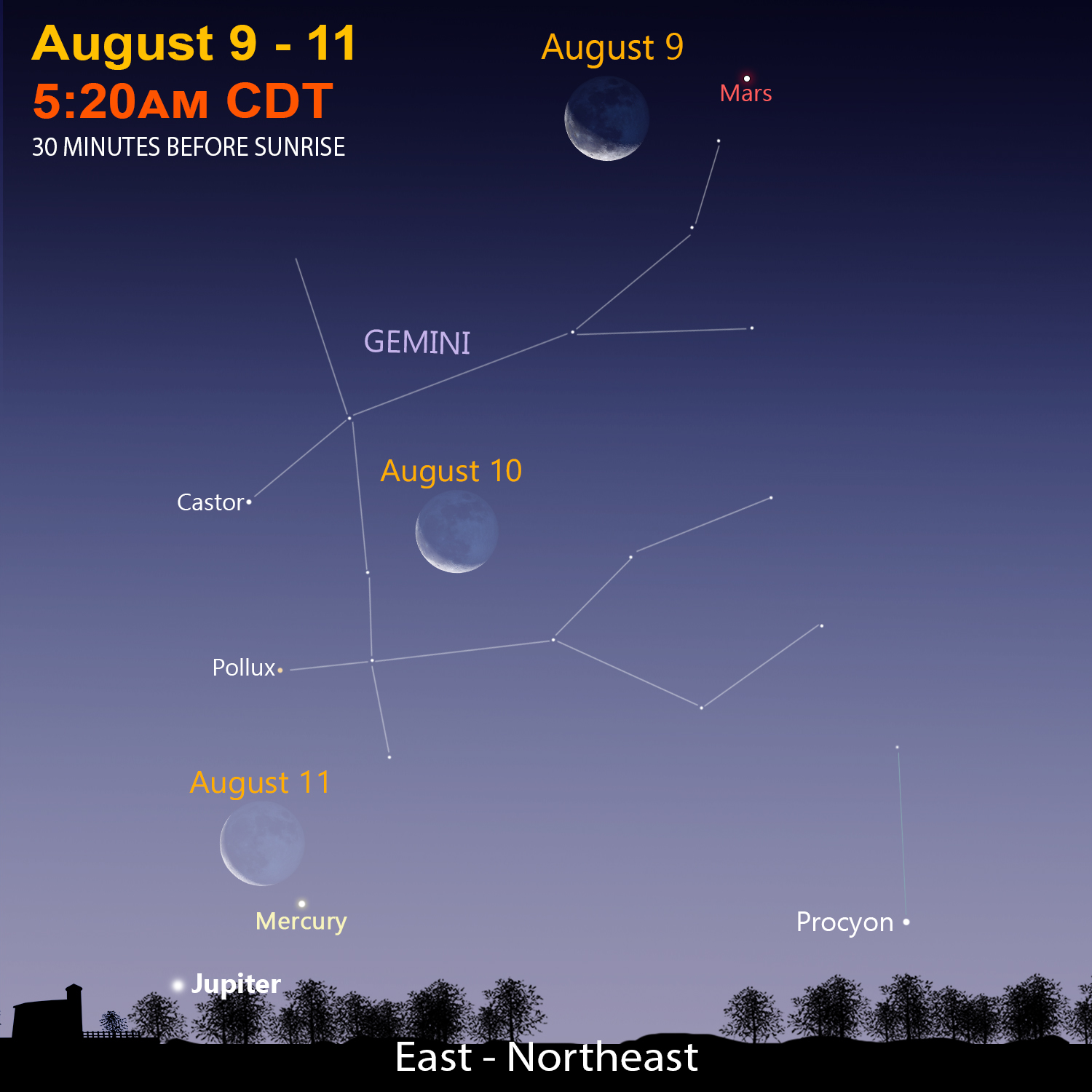
Look east an hour before sunrise to see a crescent Moon and three planets! Mars pairs up with the Moon on August 9. The United States currently has five active spacecraft working at Mars: three orbiters and two rovers.
On August 11, very low in the ENE, a smaller crescent Moon swings by Mercury and Jupiter. The celestial grouping will be very tough to spot in the bright morning twilight.
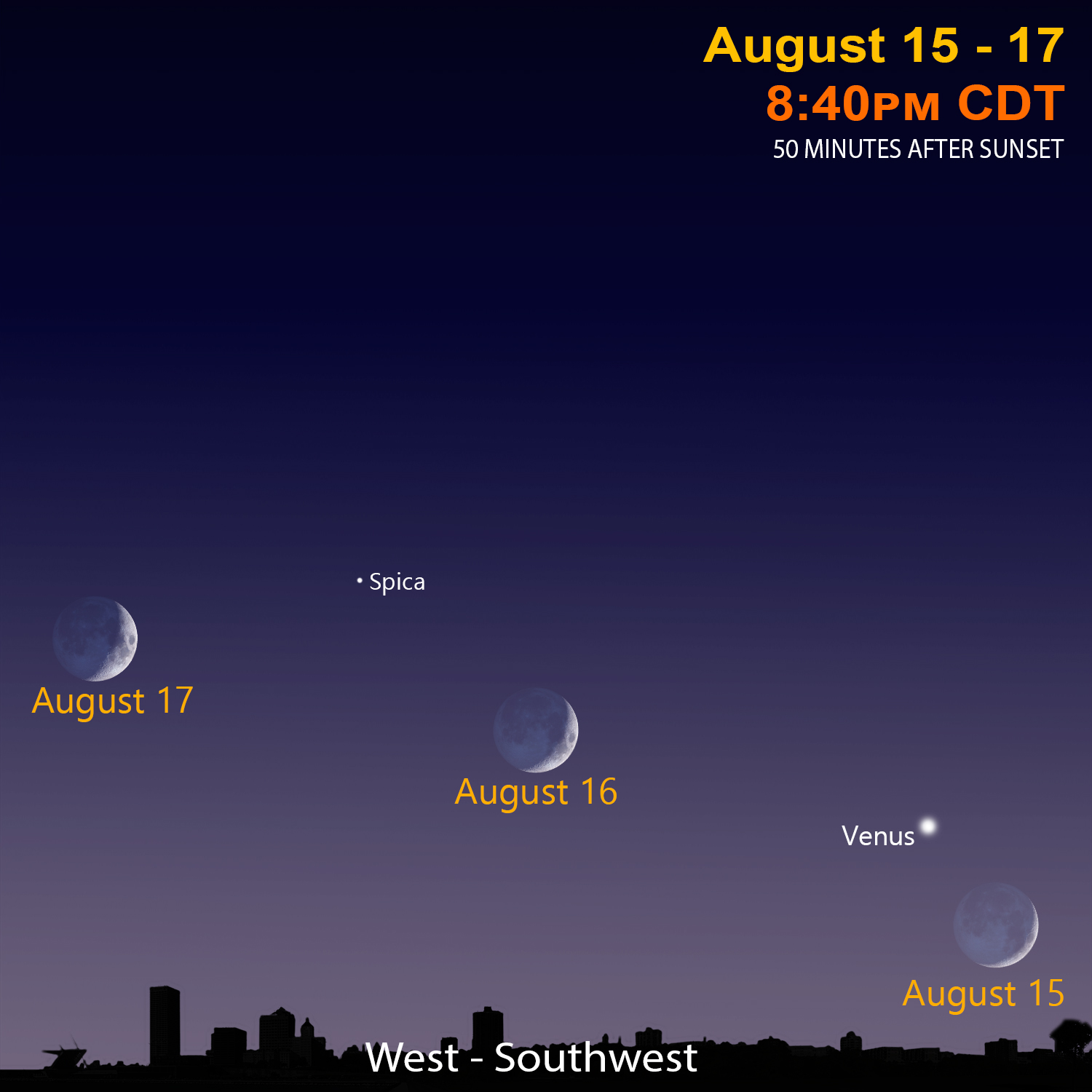
Look for the Moon orbit by Venus and the bright star Spica after sunset low in the WSW sky on the nights of August 15 through 17.
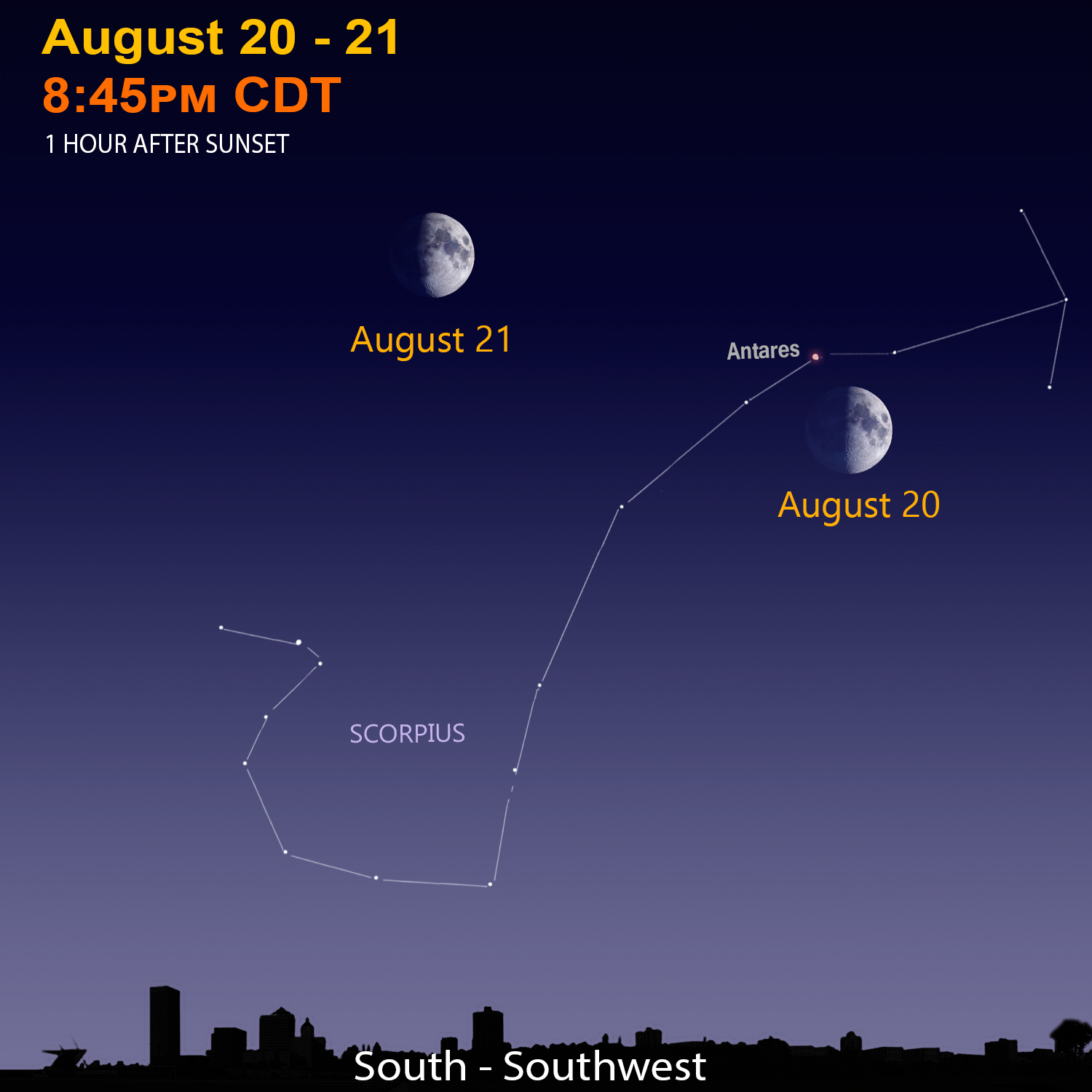
From August 20 to 21, the Moon can be observed low in the south with the stars of Scorpius.
August Star Map
Sign Up
Receive this newsletter via email!
Subscribe
See the Universe through a telescope
Join one of the Milwaukee-area astronomy clubs and spot craters on the Moon, the rings of Saturn, the moons of Jupiter, and much more.
Follow Bob on social media
Twitter: @MPMPlanetarium
Facebook: Daniel M. Soref Planetarium