
Planetarium Newsletter - November 2026
Cosmic Curiosities
The Moon was but a chin of gold
a night or two ago
And now she turns her perfect face
Upon the world below.
- Emily Dickinson, American Poet
November Space Discoveries
For our 11th month, we present 11 amazing discoveries that occurred in November!
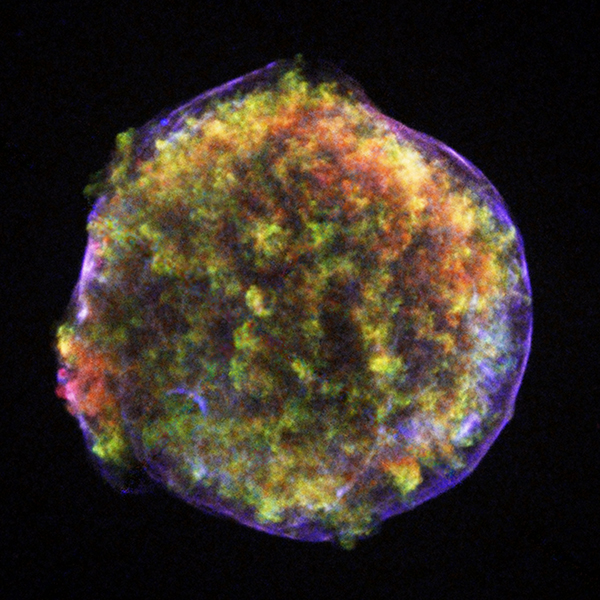
Tycho’s Supernova; credit: Chandra X-Ray Observatory
1. On November 6, 1572, astronomer Tycho Brahe (and many others) saw a brilliant new star in the constellation Cassiopeia. Brighter than Venus and visible in broad daylight for weeks, this "Stella Nova" disproved the ancient belief that the heavens were unchanging.
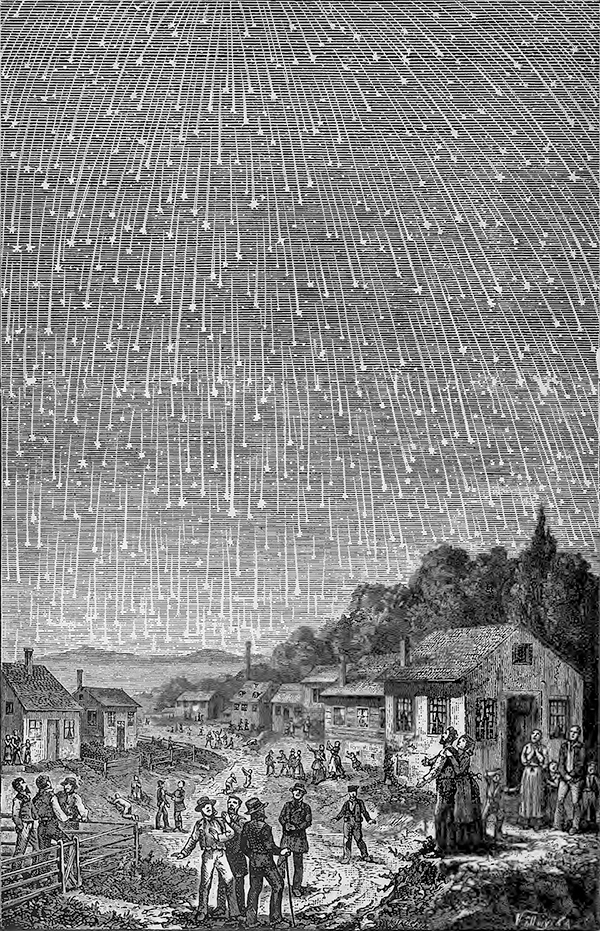
Leonid Meteors, 1833; public domain
2. On the night of November 12 and 13, 1833, the Leonid meteor shower was spectacularly intense! Meteor counts were estimated at more than 100,000 “falling stars” per hour. It directly led to the scientific realization that meteor showers are seasonal events when Earth collides with debris left behind by comets.
3. On November 12, 1980, NASA’s Voyager 1 spacecraft made its historic closest approach to Saturn, coming within 77,000 miles of the planet's cloud tops. Its breathtaking images of Saturn's rings and moon excited people all over the world.
4. On November 12, 2014, ESA’s (European Space Agency) Rosetta spacecraft’s Philae probe touched down on Comet 67P/Churyumov–Gerasimenko. It transmitted the first images directly from a comet’s surface, revealing ancient, icy fields, soaring cliffs, and dark dust untouched for billions of years.
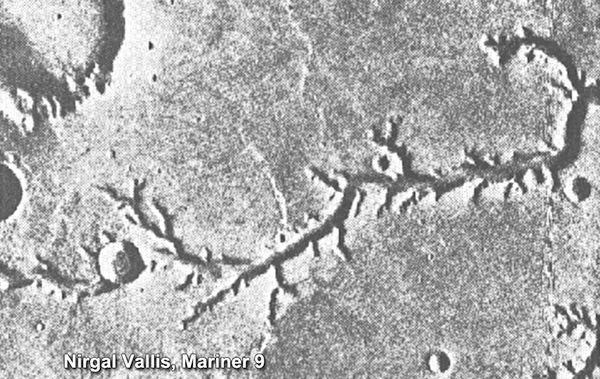
Credit: NASA
5. On November 13, 1971, NASA’s Mariner 9 spacecraft entered orbit around Mars, becoming the first spacecraft to successfully orbit another planet. It mapped roughly 70% of the Martian surface and revealed ancient riverbeds, canyons, and weather patterns.
6. On November 18, 1989, NASA launched the COBE Satellite (Cosmic Background Explorer) to study the primordial radiation from the beginning of time—the Big Bang—13.8 billion years ago. COBE measured the faint, leftover thermal signature of the infant universe. Its subsequent data mapped minuscule temperature fluctuations that provided definitive, undeniable experimental proof of the Big Bang theory.
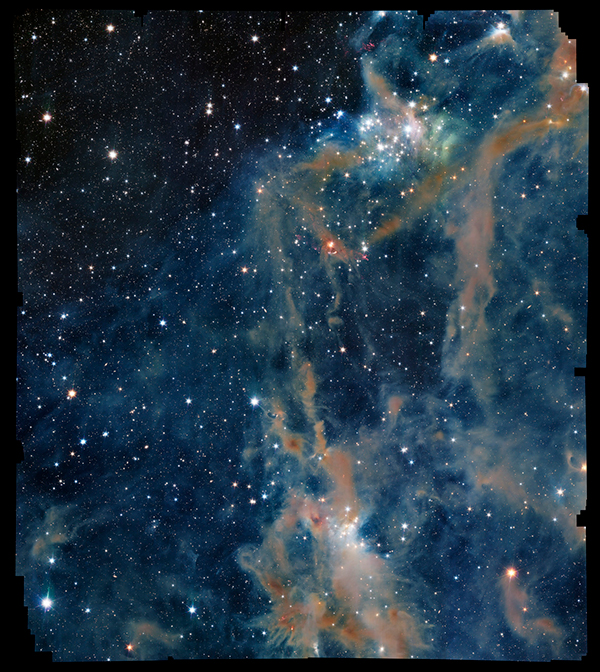
Credit: ESA/Euclid/Euclid Consortium/NASA
7. On November 18, 2025, ESA’s Euclid Space Telescope featured a stunning image of the dark nebula LDN 1641 in the Orion constellation, located 1,300 light-years from Earth. This milestone provided critical data that helps today’s astronomers determine whether dark energy’s influence on cosmic expansion is steadily weakening.
8. On November 25, 1915, Albert Einstein presented his final field equations of general relativity to the Prussian Academy of Sciences, fundamentally transforming modern cosmology by explaining how gravity works (mass and energy curving space-time).
9. On November 27, 2001, NASA and astronomers announced—thanks to the Hubble Space Telescope—the first detection of an atmosphere on a planet outside our solar system—an exoplanet. The discovery found sodium in the atmosphere of the extrasolar planet HD 209458b, nicknamed Osiris.
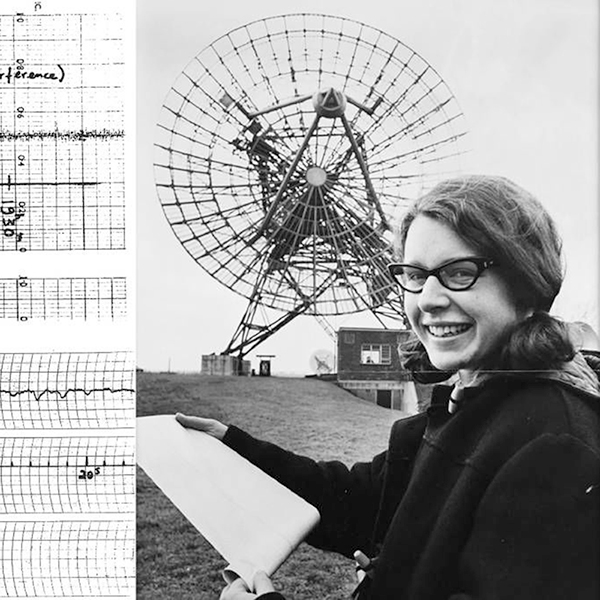
Credit: Daily Hearld/SSPL
10. On November 28, 1967, astrophysicist Jocelyn Bell Burnell detected a remarkably precise, repeating radio signal. At first, the discovery was jokingly designated as "LGM-1" (Little Green Men) because the pulsing sound was like an imagined spaceship. However, this breakthrough proved to be the historic discovery of the first pulsar—a rapidly spinning, highly magnetized neutron star—which came from the supernova death of a massive star.
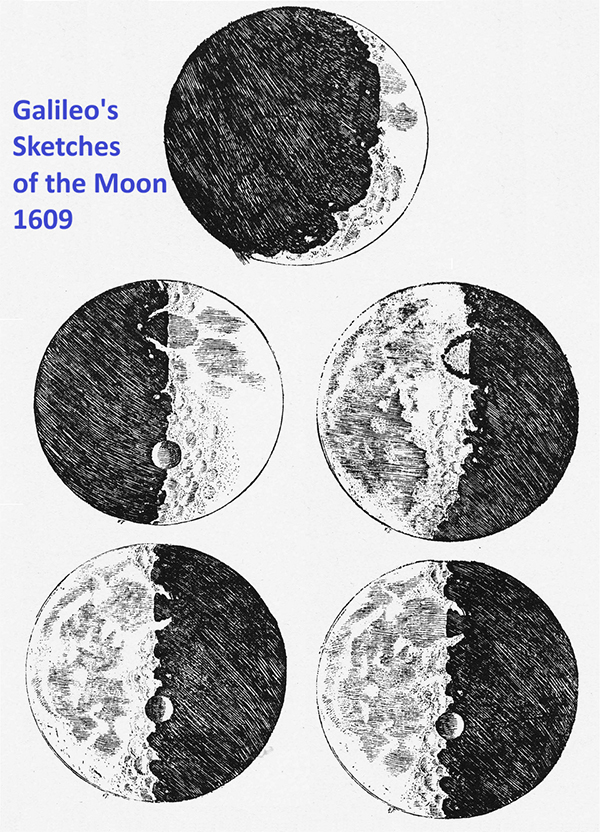
Galileo Galilei, Sidereus Nuncius; public domain
11. On November 30, 1609, Italian astronomer Galileo Galilei turned his newly improved telescope toward the moon, discovering that its surface was not a smooth, perfect sphere but rugged with mountains, valleys, and craters.
A Planetarium Short Story
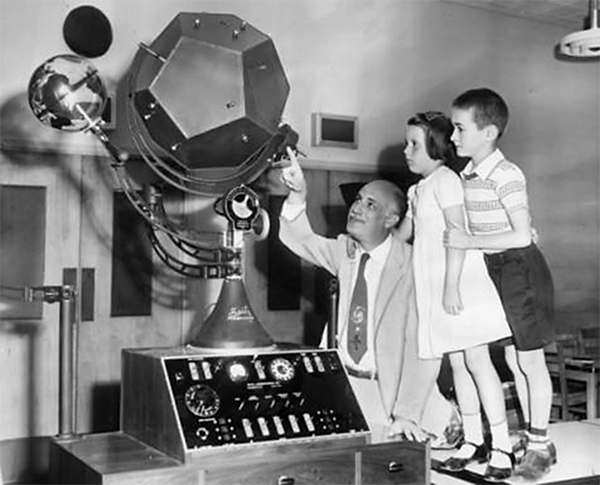
It is strange to think that Albert Einstein helped me get my first planetarium job. Almost 80 years ago, the great scientist gave a little advice to a budding planetarium entrepreneur named Armand Spitz, who worked at the Fels Planetarium in Philadelphia.
Back in the 1940s, planetariums only existed in big cities. Spitz wanted the planetarium to be available and affordable to everyone, so he decided to make his own star projector and see if it could be widely produced. One of his first efforts was made from a soap container. As he progressed, he got to know Einstein, who suggested to Spitz that his planetarium should be shaped as a dodecahedron to better resemble the celestial sphere and be less expensive to make. By 1947, Spitz had his design and his first mass-produced planetarium, called the Model A.
When the space race started in 1957, after the Soviet Union launch of Sputnik, American leaders saw a huge need for science education projects. Planetariums became a unique way to get learners of all ages excited about science and space exploration. The Spitz star projectors were so inexpensive that thousands were built in schools and museums across the United States. One such was built at the University of Wisconsin-La Crosse—my first job at a planetarium.
Space in 60 Seconds
Take a trip into the Crab Nebula!
Sky Sights
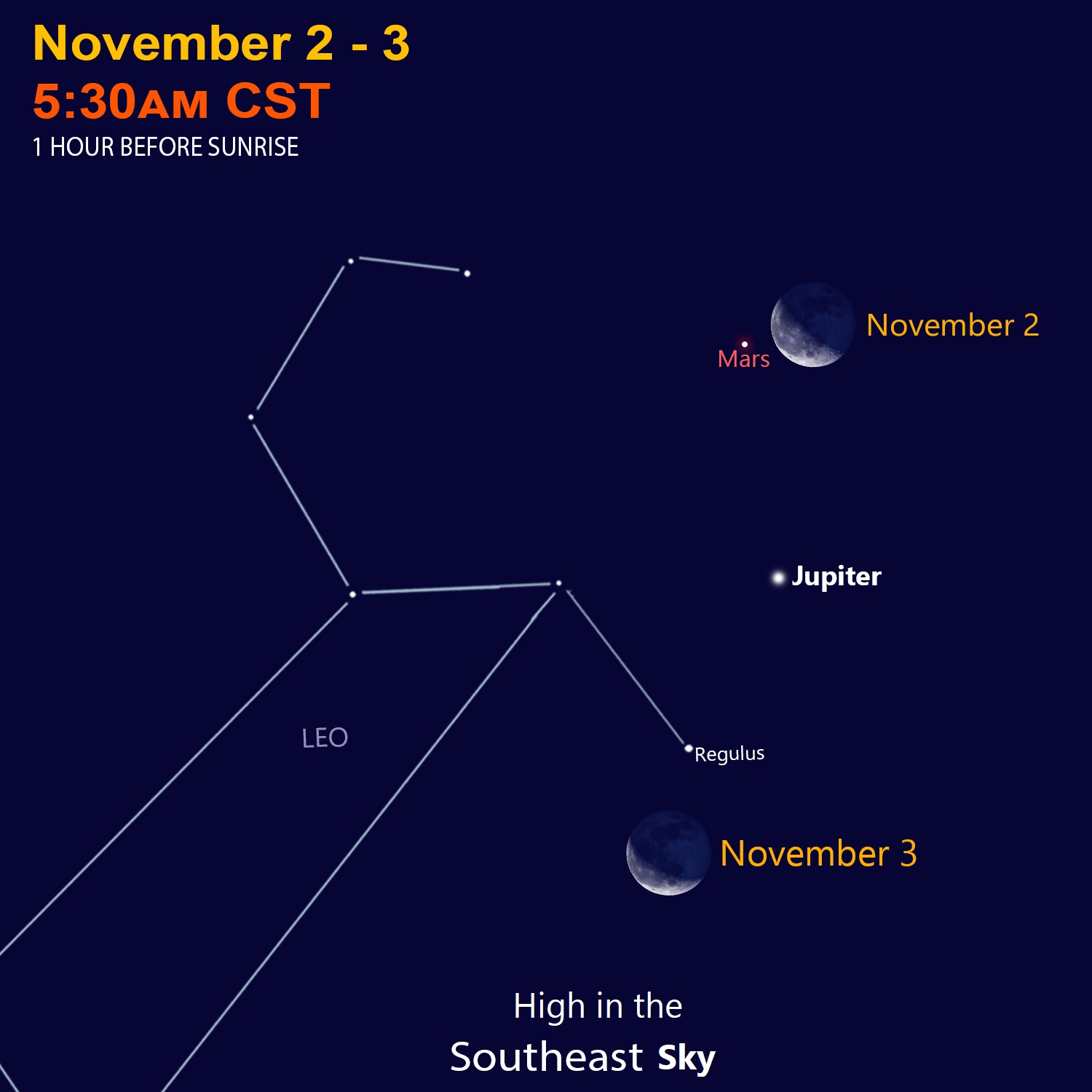
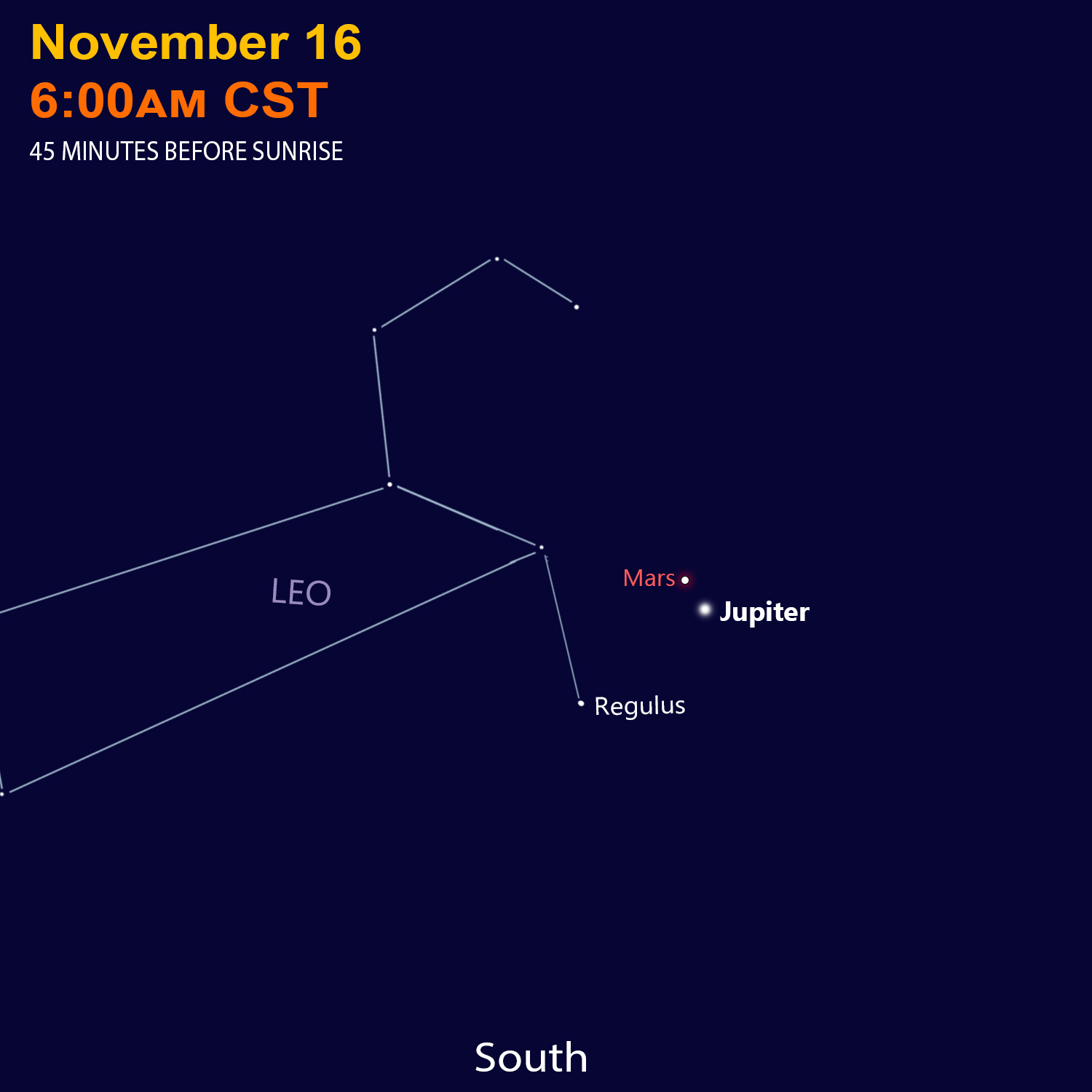
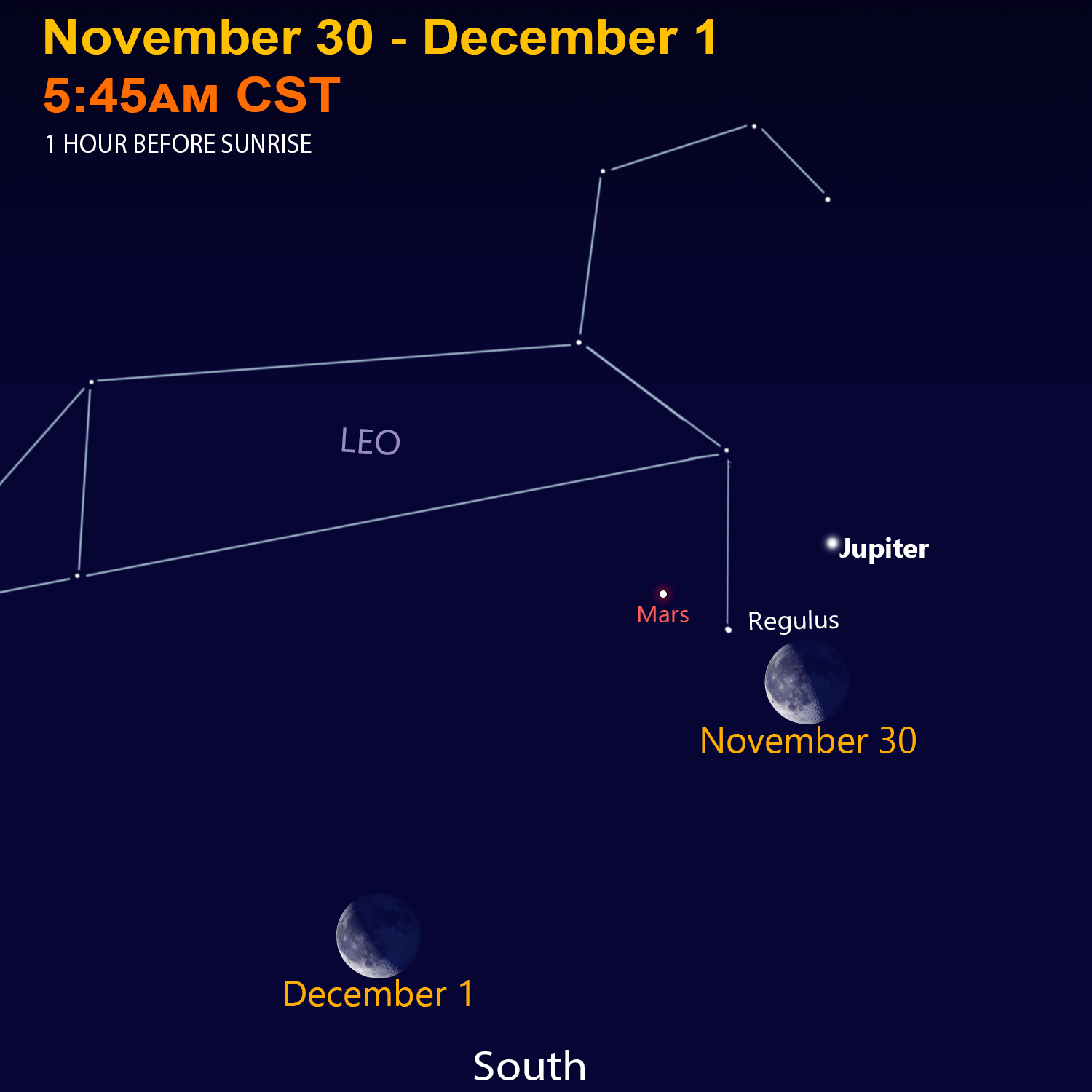
On the cold mornings of November 2 and 3, catch our lovely Moon aligning with Mars first, and then observe brilliant Jupiter. These two planets will align the closest on November 16. Watch the Moon swing by again on November 30 and December 1.
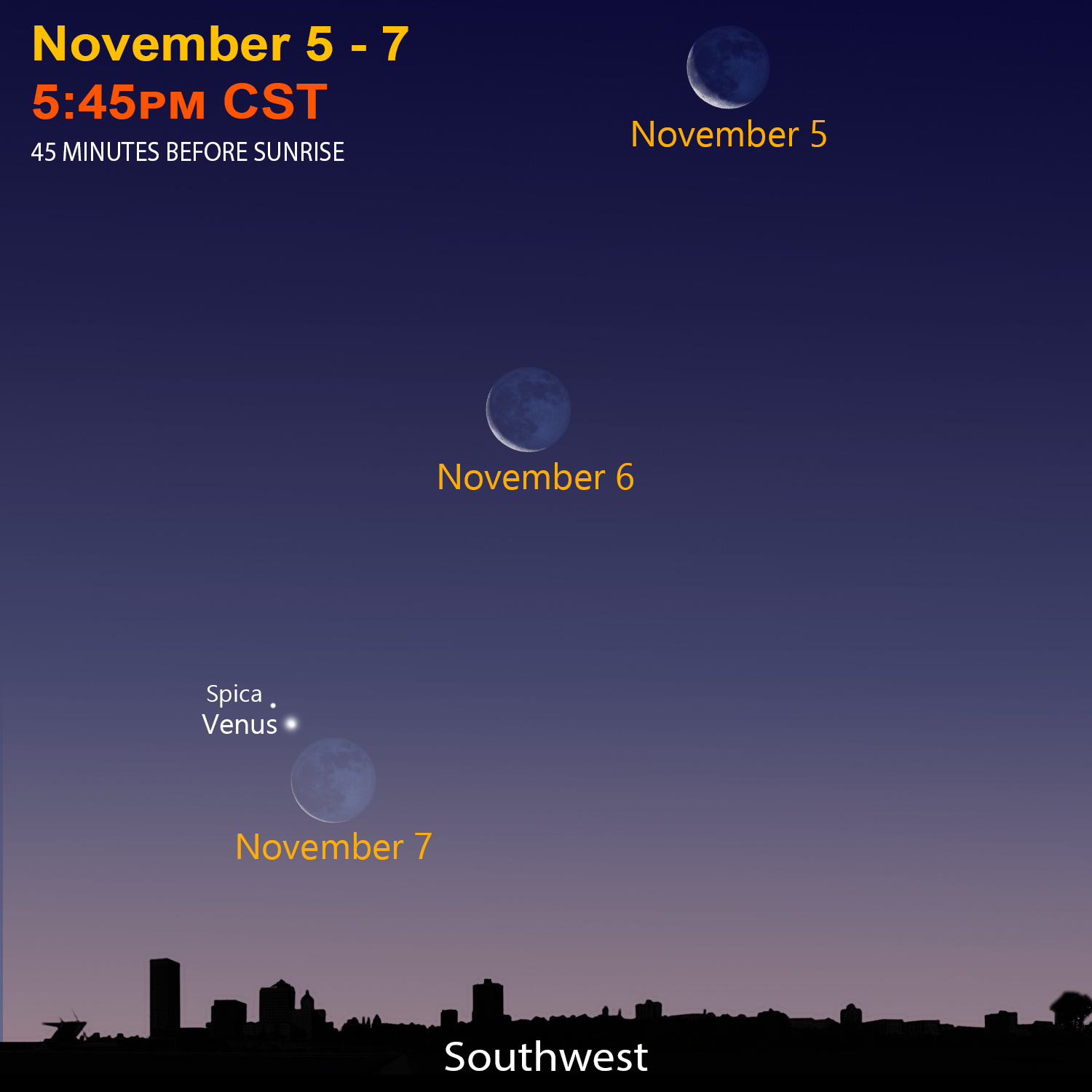
Venus returns! Look very low in the southwest. A skinny crescent Moon will help spot the brightest planet from November 5 to 7. Venus will be higher in the sky in late November.
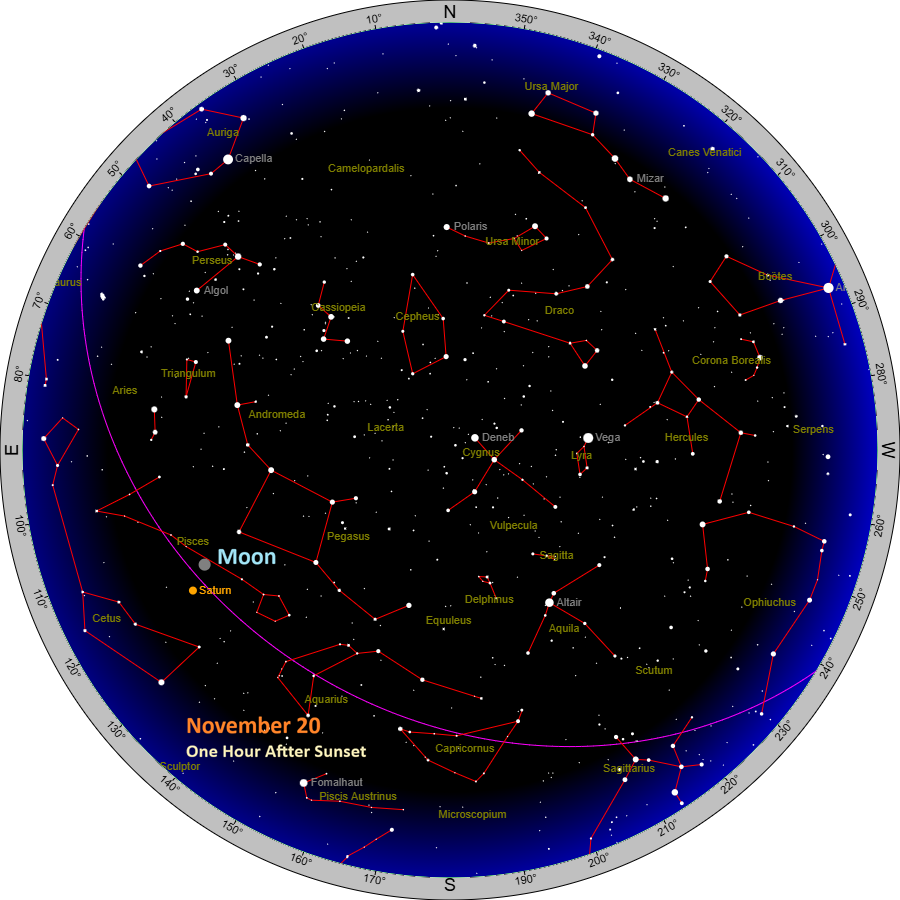
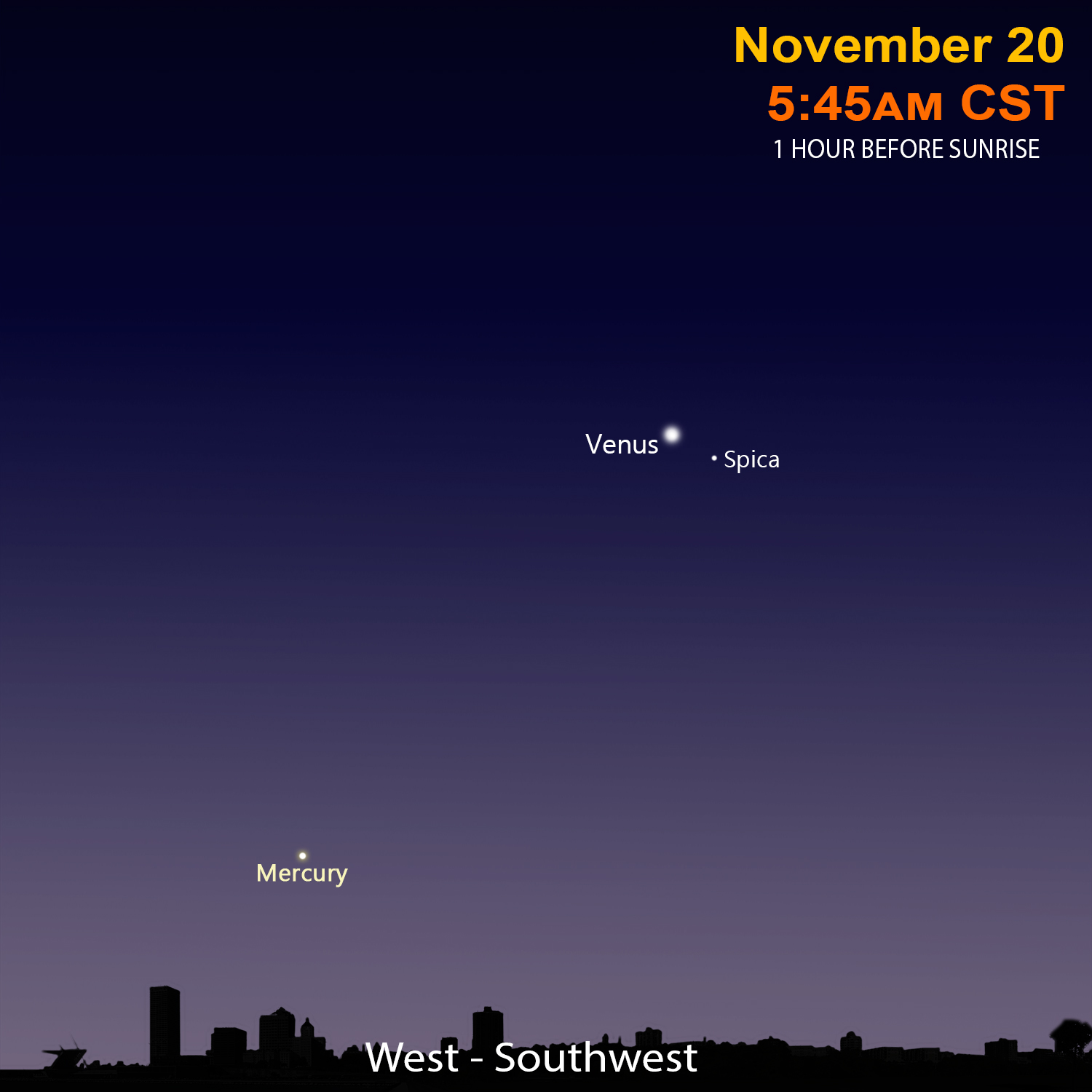
Saturn is easy to see in the east-southeast sky after sunset. See if you can spot the great square of Pegasus nearby. Look for Saturn close to the near full Moon on November 20.
November Star Map
Sign Up
Receive this newsletter via email!
Subscribe
See the Universe through a telescope
Join one of the Milwaukee-area astronomy clubs and spot craters on the Moon, the rings of Saturn, the moons of Jupiter, and much more.
Follow Bob on social media
Twitter: @MPMPlanetarium
Facebook: Daniel M. Soref Planetarium