Search
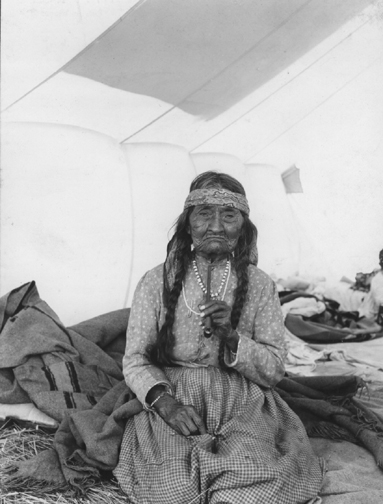
Pablo's mother-in-law
Regional Diversity and Design
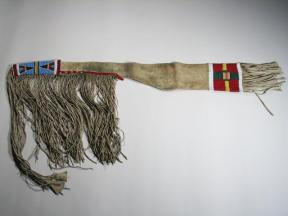
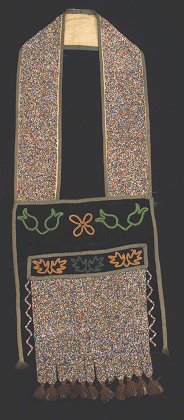
The geographical regions of North America are diverse, and so too are the people who adapted to those environments. Tribes that shared a regional domain with access to many of the same resources and environmental constraints would often develop similar technology and artistic decoration. Regional boundaries only show general patterns of similarity; they are not static.
Native American Heritage Month Dinner
Enjoy the delicious Indigenous cuisine of Ketapanen Kitchen, Chicago's first Native American pop-up kitchen and catering company.
Chamacoco Collection
The Museum's Chamacoco Collection consists of 70 objects, such as this belt ornament made of tropical bird feathers, and represent items both for everyday use and for ceremonies. Collected in 1925 by the Museum of the American Indian in New York, they came to the Milwaukee Public Museum that same year. The Chamacoco live in the Gran Chaco region of northwest Paraguay. The Chamacoco today alternate between their traditional hunting and gathering and more recent light agriculture, craftsmanship, or labor. Their population has dwindled from several thousand to approximately 1,000 people today, and few museums in the United States have such collections.
Milford Chandler Miami Collection
Milford Chandler was an automotive engineer and collector of American Indian material. He did most of his collecting between 1915 and 1926 while living in Chicago. The Miami material was collected by him in Peru, Indiana. The material includes a woman's robe, a pair of woman's leggings, a pair of men's leggings, and a hair ornament. The majority of the Miami were relocated in the 1800s to Oklahoma. Those who stayed in Indiana became largely acculturated into American society; as a result, material culture from the Indiana Miami is quite rare.
Trinidad Collection
Trinidad, one of the islands forming the Republic of Trinidad and Tobago in the southern Caribbean, has been ruled by several previous European powers, the last being Great Britain. On this small island, people from the various cultures of Asia, Europe, Africa, and native groups live and interact. This rare collection is from the East Indian peoples on the island and was collected by Milwaukee Public Museum Curator of Anthropology Dr. Arthur Niehoff in 1957. The East Indians were brought to the island by the British as indentured servants. The collection, one of only a few in the United States, is important since it shows the cultural exchange and influence that has occurred between the East Indians and the other groups inhabiting the island.